
Earlier this year, Adobe measured AI traffic to US retail sites up 693% year on year, and Salesforce found AI influenced one in five of all global orders during Cyber Week. That influence didn’t begin during Cyber Week. The content, reputation and product evidence behind those decisions was being built well before peak.
So this article is about getting ahead of peak: what I’d want in place before demand hits, ChatGPT Ads rolling out in the UK, what presenting to 100+ people at an AGM taught me about who actually shapes a brand’s AI reputation, and a twenty-minute check you can run on your own brand today.
Okay, so Black Friday in August might look a little premature on first read. I personally loathe it when shops start sneaking Christmas products on the shelves at the beginning of September. If you’d told me a few years ago that I’d be talking about peak trading before the school holidays were out, I’d have raised an eyebrow too.
But if search is expected to contribute to that peak, now is exactly when I’d want brands getting their plans in order.
The sale itself is still more than three months away. The work that influences who gets found, trusted and recommended shouldn’t be.
Now is the time to take a fresh look at the products and categories expected to drive peak revenue, the content supporting them, how competitors are positioned and, increasingly, what AI search says when customers ask which brands and products they should consider.
Google and AI platforms won’t suddenly decide you’re authoritative when the Black Friday offers go live. They’re already discovering content, processing reviews, finding third-party references and building a picture of the brands they surface.
The sale might happen in November, but the evidence influencing it is being built now.
Last year’s numbers show why. Adobe measured traffic to US retail sites from generative AI tools up 693% year on year across the 2025 holiday season. That’s growth from a small base, but the direction is hard to argue with.
Salesforce found AI influenced one in five of all global orders during Cyber Week, through personalised recommendations and conversational customer service.
That was last November. The brands AI recommended didn’t earn that position during the sale, but in the months before it.
What I’d want in place before peak
It’s why I made it the subject of my most recent conference session.
On 24th September I spoke at eCommerce Expo at Excel London, on the AI-Powered Marketing Stage, on ‘Black Friday Starts in AI Search: How to Win Visibility Before Peak Demand Hits’. The slides are on SpeakerDeck.
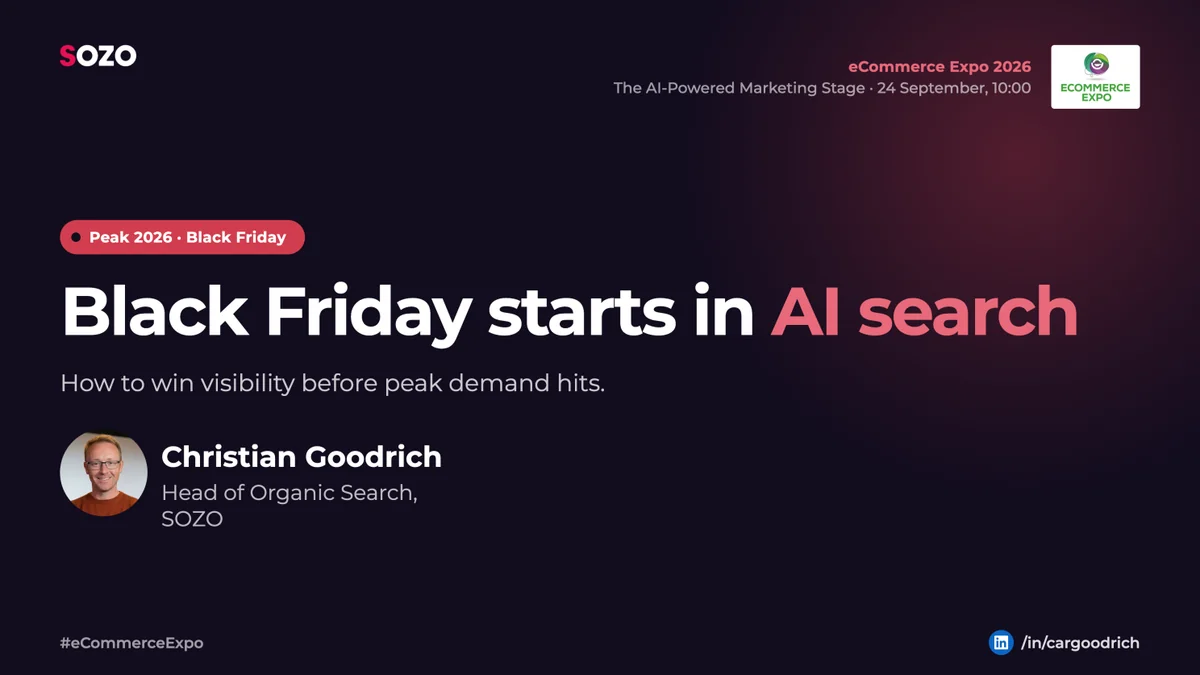
The session was aimed at ecommerce teams who are already deep into peak planning around offers, stock and paid budgets, but haven’t yet looked closely at what AI is telling customers about them.
By late September I’d want those foundations well underway rather than only beginning the conversation, because this is the part of peak preparation that can’t simply be switched on in November.
Traditional SEO remains a big part of it. Are the priority category and product pages technically sound? Is the content answering the questions customers ask before buying? Are strong pages internally linked properly? Can Google understand the range and the relationships between products?
AI search adds another layer.
What happens when someone asks ChatGPT which product is best for their requirements, how two retailers compare, whether a brand is trustworthy, what customers commonly complain about or which products offer the strongest value?
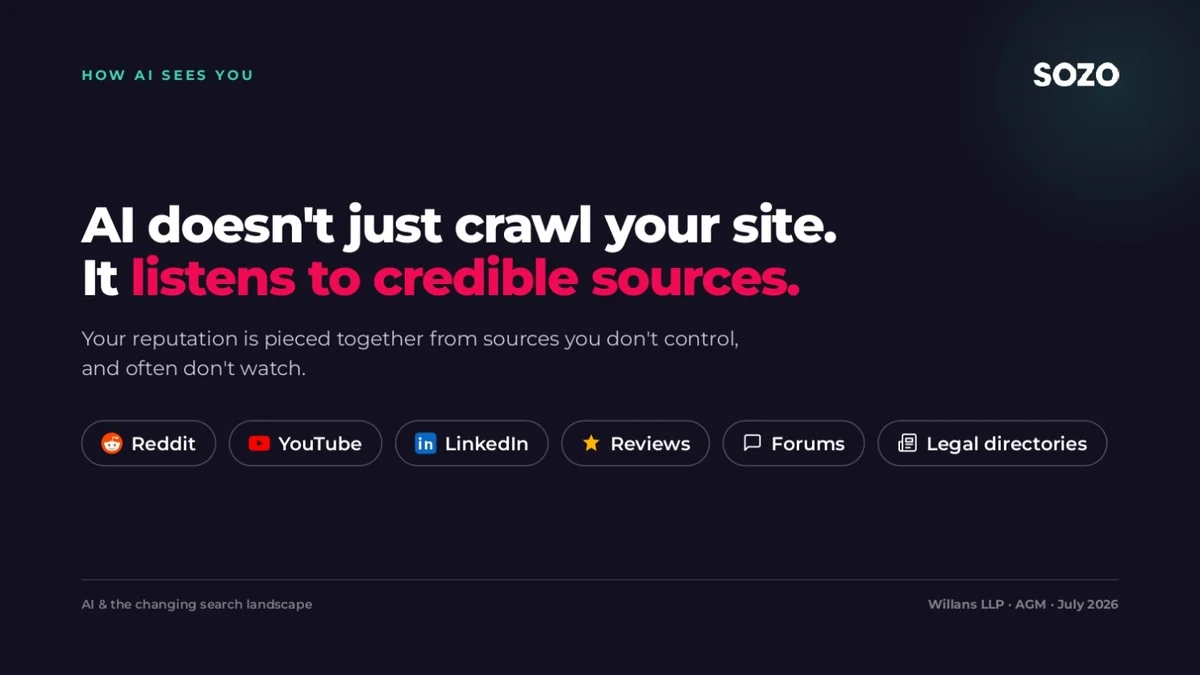
The answer may draw from the brand’s own website, but it can also be shaped by reviews, YouTube, Reddit, publishers, comparison sites and other sources the brand doesn’t control.
I’ve since gone further into this in a session for Search With Sean Live 2026, including why AI traffic looks so small in GA4 when it tends to convert better than the traffic around it:
Paid AI search is arriving too
There’s another reason brands are becoming more curious about ChatGPT as we head towards peak.
ChatGPT Ads is now rolling out in the UK, following the initial US test, with ads currently appearing for eligible Free and Go users while paid plans remain ad-free:
It’s still early, but that’s partly what makes it interesting.
Google has become an intensely competitive paid environment. ChatGPT, by comparison, remains predominantly an organic discovery experience, with sponsored placements kept separate from the answers themselves.
For ecommerce businesses heading into peak, it introduces another potential route to paid visibility while someone is actively researching or comparing a purchase.
I wouldn’t see paid ChatGPT exposure as an alternative to organic AI visibility, though. If anything, it strengthens the case for treating paid search, SEO and AI search as one connected growth system.
Paid can buy additional exposure. It can’t manufacture the reviews, external authority, useful content or positive brand sentiment that influence whether the answer itself recommends you.
What speaking to the Willans team reinforced for me
The principle goes well beyond ecommerce.
Last month, I was invited to speak at the annual AGM of Willans LLP solicitors, a law firm we’ve worked with at SOZO since we built their website in 2019. It’s not every day a client asks you to address their entire firm.
We spoke to more than 100 people about how AI is changing the way prospective clients find lawyers, research legal questions and decide who they might trust before making contact.
A lot of the session focused on how that journey has expanded beyond Google and the firm’s website. People can now encounter an AI answer, research an individual lawyer, read reviews, check directories and compare firms before anybody submits an enquiry.
The part I’ve thought about most since is what that means for the wider business.
Our analysis showed how reviews, professional profiles, directories and external sources all contributed to the picture AI assembled about Willans.
That means improving AI visibility isn’t something the marketing team can do entirely on its own.
A solicitor keeping their professional profile accurate helps. Sharing useful expertise helps. A happy client leaving a considered review helps. Spotting legal guidance that’s become outdated before AI starts repeating it helps.
The search team can measure the picture and identify the gaps, but much of the evidence comes from the people actually doing the work. That broader remit is also reflected in my recent move at SOZO from Head of SEO and AI Search to Head of Organic Search.
The same principle applies to a retailer heading into peak. The evidence AI draws on comes from customer reviews, product information, service experiences and the people answering customer questions every day, not only from whoever owns the website.
Three things I’d prioritise before peak demand arrives
Black Friday gives ecommerce businesses a deadline, but these principles apply to almost any brand trying to improve traditional and AI-driven search visibility.
1. Start with the commercial decision, then choose the channels:
Don’t begin with one SEO keyword list, another AI prompt list and a separate paid media plan. Start with the decisions you most need customers to make.
Which products or categories are expected to drive peak revenue? Where is the strongest margin? Which comparisons happen before purchase? Which questions appear immediately before someone buys, enquires or walks away?
Then decide where search can influence those decisions, whether that’s Google Ads, traditional organic search, AI visibility or a combination of all three.
The channel comes after the commercial priority.
2. Build the evidence before you need the visibility:
Your website needs clear product information, technically accessible content and useful pages answering the questions customers ask, but it can’t carry all the evidence by itself.
Reviews, publishers, social content, video, communities and other third-party sources can all influence how customers and AI platforms understand a brand.
The balance differs considerably between businesses, which is why there isn’t a universal “AI optimisation” checklist. I wish there were, it would make my job considerably easier.
Ask a more useful question:
Why should a customer, Google or an AI assistant believe what we’re claiming?
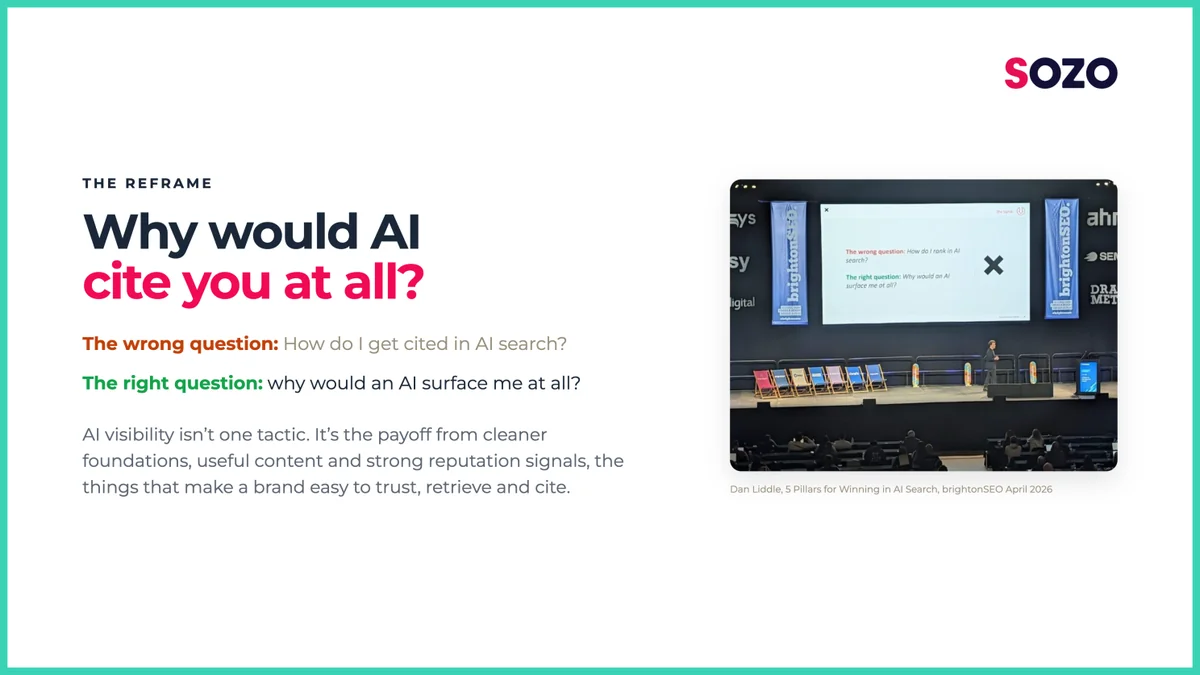
If the answer is thin, work out what evidence is missing and start building it now.
3. Check what customers are being told before you increase demand:
Before increasing spend and promotional activity, I’d want to know what happens when someone asks AI whether they should buy from the brand.
Is it recommended? How does it compare with competitors? Which strengths are repeated? Which criticisms keep appearing, where are they coming from and are they accurate?
You can do a useful first check yourself, and it takes about twenty minutes.
Use a fresh or Temporary Chat rather than relying solely on the ChatGPT account you use every day. Ask category and comparison questions without naming your own brand, then note whether you’re mentioned, recommended, described accurately and which sources are being used. It’s a good starting point.
Repeat the exercise across ChatGPT, Gemini, Perplexity and Google’s AI experiences rather than treating one answer as definitive.
I’ve written a fuller walkthrough of how to do this at SOZO: what AI says about your business
Sometimes the response is clearer content. Sometimes it’s stronger external validation. Sometimes AI has picked up a real problem with delivery, returns, customer service or the product itself.
AI search often doesn’t create the reputation problem, but makes an existing one much harder for prospective customers to miss. What it surfaces is usually already sitting in reviews, third-party coverage and the wider web.
November, with the budget committed and demand peaking, is an expensive time to discover what AI has been telling your customers all year.
A break from search
Last week I flew across the Atlantic and spent four nights in Maine visiting my sister and family, which was a very welcome change of scenery and a rare few days where AI visibility wasn’t especially high on the agenda:

Back home, I’m now gearing up for another grassroots football season in September, my third year of coaching my own team as we enter the U10s age group.
So between football, eCommerce Expo and the run into Black Friday, autumn should be suitably quiet(!)
A final note: peak arrives quickly
Black Friday puts a fixed date against something search teams and brands should be thinking about throughout the year.
Demand can spike overnight. Authority, reputation and customer confidence generally don’t.
For ecommerce brands expecting November to contribute a sizeable share of annual revenue, now is the time to take another look at the products you need to win on, the content supporting them and what Google and AI search currently tell prospective customers about you.
For businesses without a Black Friday campaign, the broader principle is much the same. Search is influencing more of the decision before somebody reaches your website.
The earlier you understand where you’re visible, what customers are being told and what evidence sits behind it, the more opportunity you have to influence the commercial outcome.
If you came along at eCommerce Expo, thanks for listening. If not, my messages are always open, especially if you’ve just tried that twenty-minute check and didn’t love what you found.
The CRO and paid search side of peak is written up separately, and both are collected on my Black Friday SEO + PPC 2026 page, along with the free planning template I use to keep the work in order.
This article first appeared as an edition of my Return on Search newsletter on LinkedIn.