My role as a search specialist has changed more in the last year than in the ten before it. Search used to be settled: you ranked, you got traffic, you converted some of it. That deal is coming apart. People get answers from AI without clicking, buy through assistants, and form a view of your brand in places you never see.
The brands winning right now aren’t the ones with the best rankings, but the ones who can still tie search to revenue while the ground moves under them. It’s the thinking behind why I called my newsletter Return on Search: the point was never the visibility itself, but what search returns to the business.
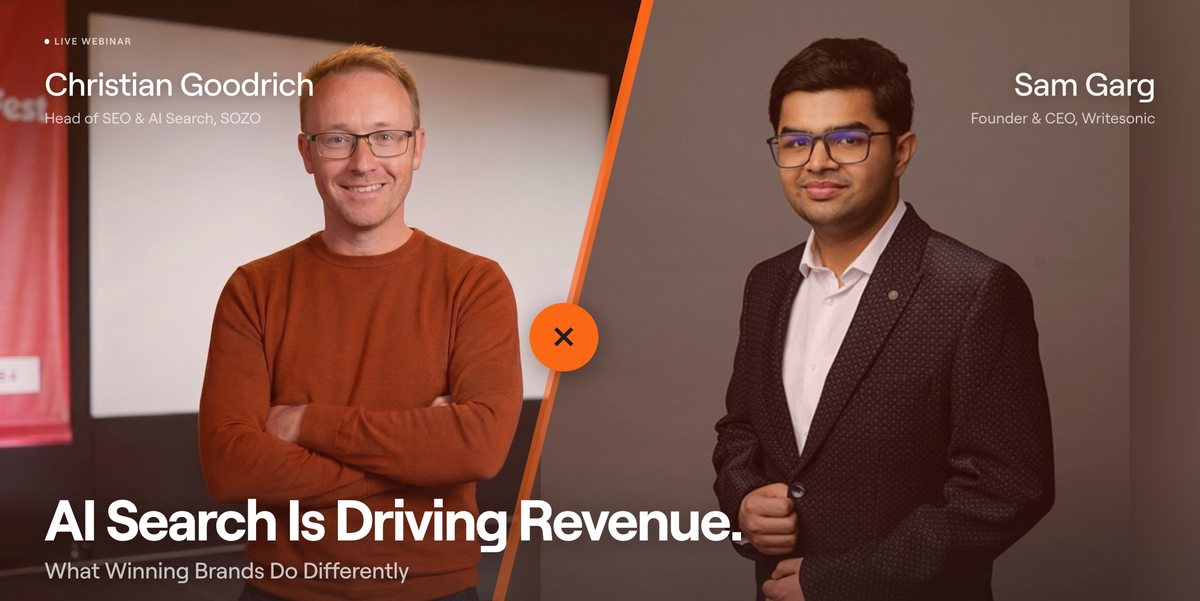
I recently went live with Samanyou Garg, founder and CEO of Writesonic, for a session on what winning brands do differently in AI search. This is the recap, the argument and the ten takeaways we landed on.
Ranking first isn’t being recommended
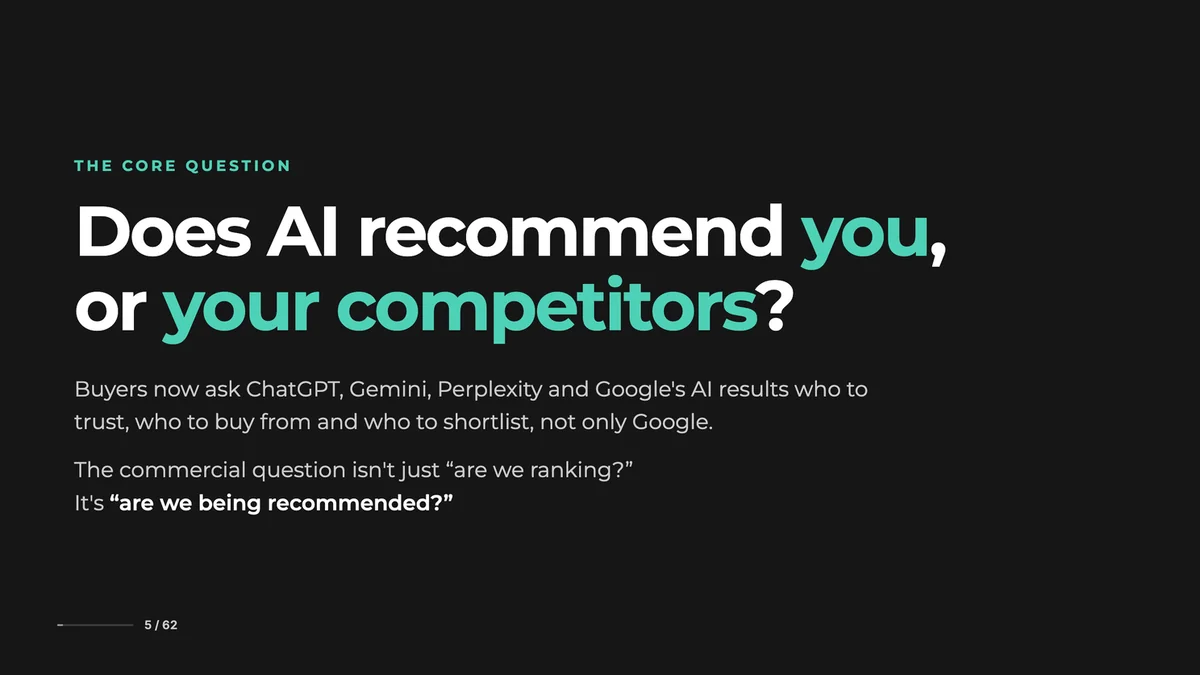
The blunt question I keep putting to brands: when someone asks ChatGPT, Gemini or Perplexity for the best in your category, does it name you, or the company down the road? Most don’t know when I first ask, or they’re going off their own prompting of their own brand, which is badly skewed by their context and bias.
The winners aren’t always the biggest, either. Specialist depth and clean structure beat brand size more often than you’d think. Most brands don’t yet know how visible they are in AI search, or how they’re being described, and measuring it gives you a practical place to start improving trust, visibility and revenue.
AI search is now measurable
Back in December, at SOZO we re-platformed an independent fabric retailer that competes with UK household names like John Lewis, moving their entire store of 6,000+ SKUs just days before Christmas. Migrations at that scale are tense, and there are never guarantees with how search engines and AI platforms will take changes that big.
Within 30 days their Google Gemini visibility was up around 30%, with visibility up 10% across all tracked AI platforms. Across their tracked terms they now appear in 94+ relevant Google AI Overviews; a household-name department store in the same category shows up in 3. Not by outspending anyone, but by getting the foundations right and answering the real friction points their customers raise. I’ve written up that migration in more detail in the case study.
Most of what AI says about you isn’t from your site
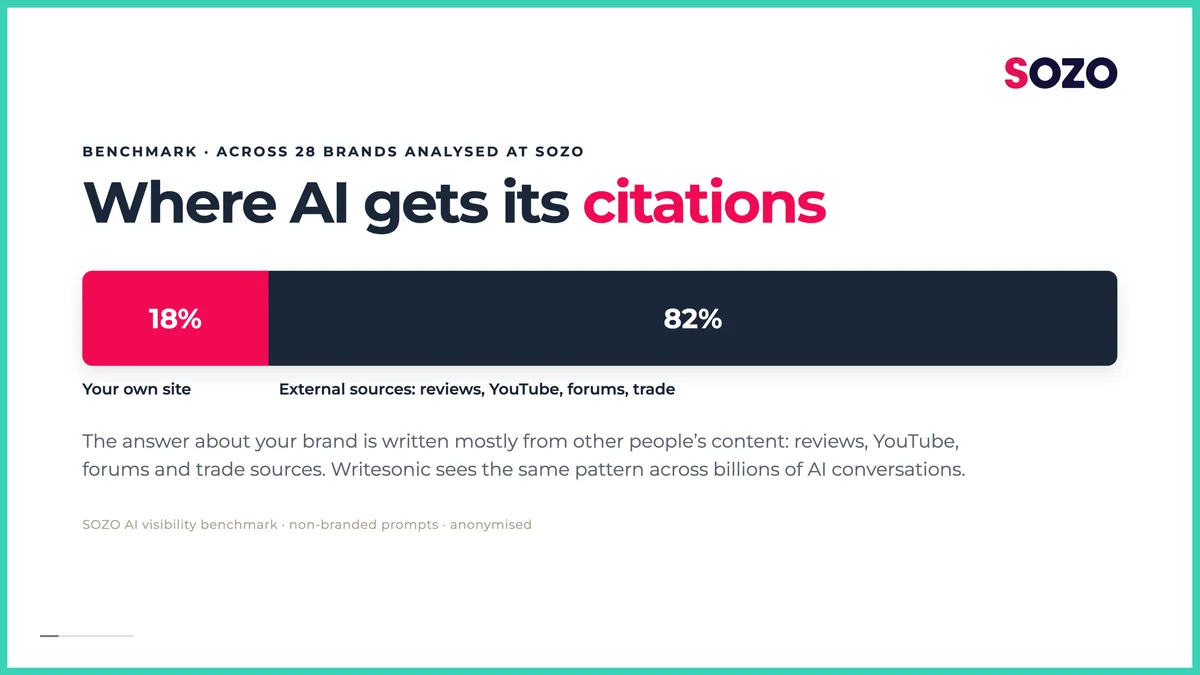
When we measure where these tools draw their picture of a brand, the bulk comes from sources you don’t fully control: third-party review sites, Reddit, YouTube, forums. Your own site is a smaller slice than you’d expect. Authority is earned off your site as well as on it, and it’s work many brands are slow to invest in.
Across 28 brands we analysed at SOZO, 82% of the citations behind AI answers came from somewhere other than the brand’s own site.
Being named isn’t being recommended
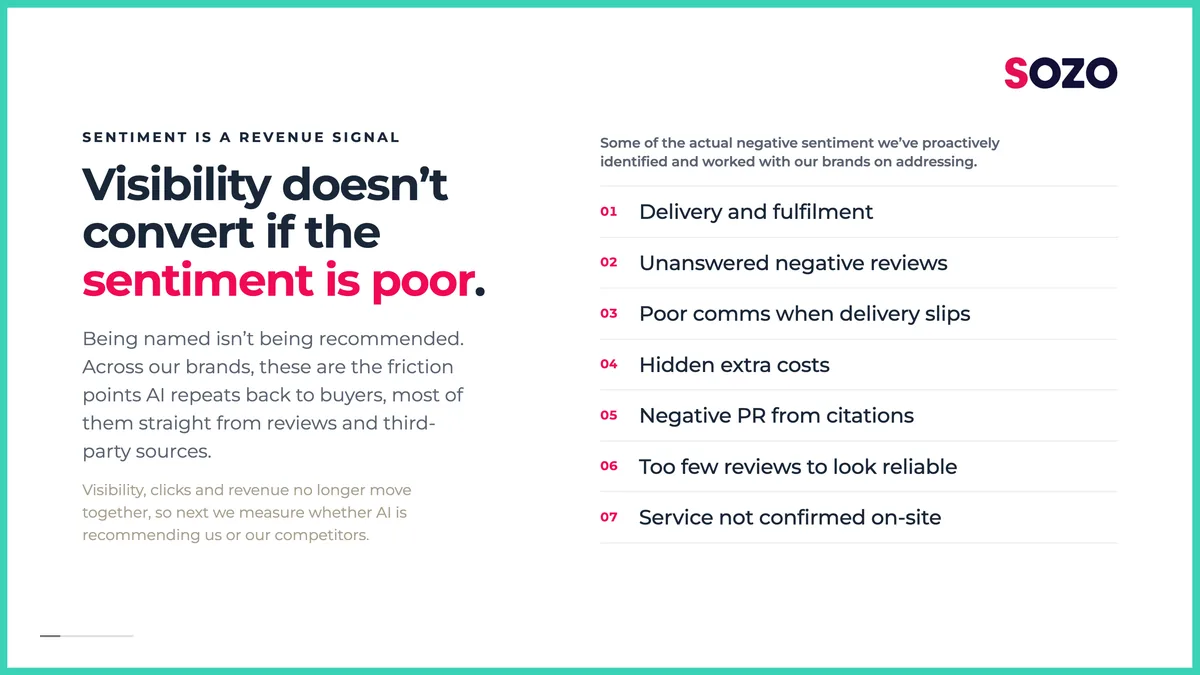
Showing up is only half of it. The sentiment these tools carry, and the caveats they repeat back to buyers, can lose you the sale before anyone reaches your site. More often than not it’s a customer-experience issue in disguise, lifted straight from your reviews, and fixable once you can see it.
The friction points that come up most often, lifted from reviews and third-party sources rather than anything the brand publishes about itself.
Practical takeaways
The ten takeaways from the session, in full:
×
WEBINAR RECAP
What winning brands do differently in AI search.
10 key takeaways from our live Writesonic & SOZO webinar on winning in AI search, across 60+ brands.
Swipe for the highlights→
Christian Goodrich
Head of SEO & AI Search, SOZO
in/in/cargoodrich
WHY THIS MATTERS NOW
64%
of AI buyers click no outside link at all. The decision happens inside the answer.
And 74% pick whatever the AI ranks first.
2×
AI clicks convert vs organic
+37%
revenue per AI visit
42%
likelier to buy after an AI referral
CITED ISN'T RECOMMENDED
40%
of the time you're cited, the answer never names you.
Being cited isn't being recommended. Measure whether you're named, not just linked.
52%
Perplexity
41%
AI Overviews
37%
ChatGPT
THE NEW NORMAL
68%
of Google searches now end without a click.
Up from 60% in 2024. AI answers increasingly resolve the query right on the results page.
in/in/cargoodrich
Christian Goodrich
READING THE DATA
KEY TAKEAWAY
01
Zero clicks doesn't mean zero demand.
A traffic dip isn't always a demand dip. The intent is still there, it just resolves before the visit. Measure demand, not only sessions.
in/in/cargoodrich
Christian Goodrich
ON-SITE CLARITY
KEY TAKEAWAY
02
Make it obvious what each page is.
AI leans on your H1, title, meta and URL slug to classify a page fast. Get those signals unambiguous and it files you under the right intent, before it ever reads a word of the body.
in/in/cargoodrich
Christian Goodrich
CONTENT DEPTH
KEY TAKEAWAY
03
Then give it something to say.
Clear signals get you classified; real substance gets you cited. A collection page that's just a grid of products gives AI nothing to quote, so add context, copy and answers to the questions buyers ask.
in/in/cargoodrich
Christian Goodrich
OFF-SITE TRUST
KEY TAKEAWAY
04
Your reputation is built off-site.
Reviews, forums and publishers decide whether AI trusts you. You don't own the whole story, so you have to earn it everywhere buyers look.
in/in/cargoodrich
Christian Goodrich
REDDIT · WHAT PEOPLE REALLY THINK
KEY TAKEAWAY
05
Reddit says the quiet part out loud.
It's the clearest window into what people really think, unfiltered and candid, and AI leans on it heavily. Read the room, then show up there honestly.
in/in/cargoodrich
Christian Goodrich
PROOF IN REAL TIME
18k impressions, and #1 on Google in 48 hours.
I asked locals on Reddit for their favourite independents in Cheltenham. Four days later it had 18,000 impressions, and the thread ranked #1 on Google within 48 hours.
18K
IMPRESSIONS IN 4 DAYS
#1
GOOGLE RANK IN 48 HRS
in/in/cargoodrich
Christian Goodrich
THE PLAYBOOK
KEY TAKEAWAY
06
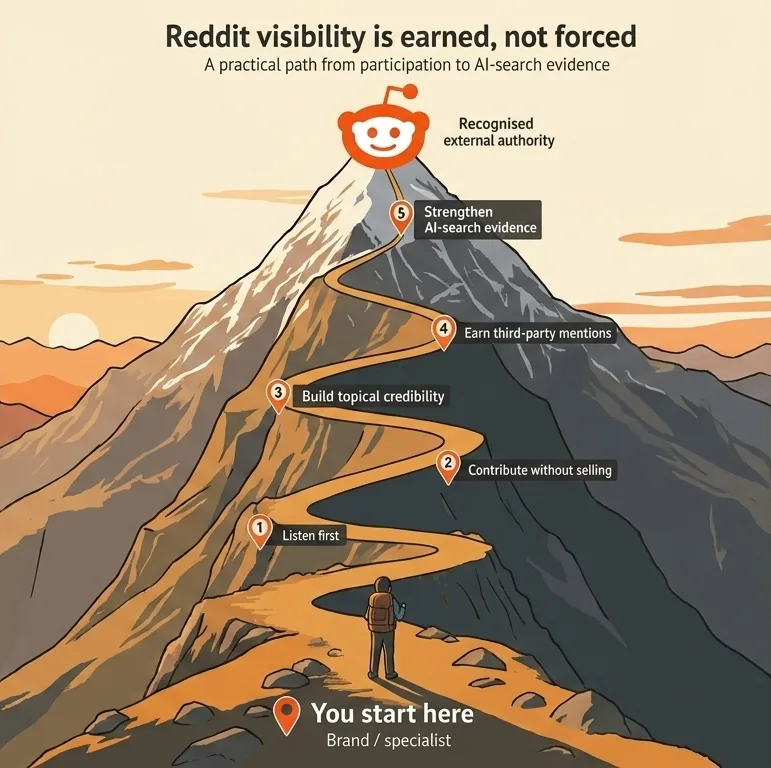
Reddit is a mountain. Climb it slowly.
1Listen first.
2Contribute usefully.
3Earn trusted mentions.
The link isn't the prize. The proof is.
in/in/cargoodrich
Christian Goodrich
THE CLIMB
in/in/cargoodrich
Christian Goodrich
AUTHORITY
KEY TAKEAWAY
07
Digital PR is a powerful trust signal.
It's one of the strongest levers you can pull. Relevancy from authoritative sources moves AI visibility more than volume, so a handful of high-authority placements beats hundreds of weak links.
in/in/cargoodrich
Christian Goodrich
COMMERCIAL RETURN · GA4
KEY TAKEAWAY
08
Fewer AI visits, but they convert harder.
GA4 and attribution tools struggle to show the full impact of AI search, they capture only a fraction of AI-influenced visits. But the ones they do track convert well above the site average. Small numbers, serious intent.
in/in/cargoodrich
Christian Goodrich
ATTRIBUTION
KEY TAKEAWAY
09
Not all marketing is fully measurable.
Zero attribution does not mean zero demand. Some of your best-performing channels will never show up cleanly in a report. Judge them on the whole picture.
in/in/cargoodrich
Christian Goodrich
FOUNDATIONS FIRST
KEY TAKEAWAY
10
The fundamentals didn't go away.
AI search is built on solid SEO. Crawlability, clean architecture, fast pages and structured data still decide whether AI can find, understand and trust you. Get the basics right and everything above compounds.
Crawlable & fastClean architectureStructured data
in/in/cargoodrich
Christian Goodrich
Christian Goodrich
Head of SEO & AI Search, SOZO
in/in/cargoodrich
18+ years helping ambitious brands turn search into measurable growth.
Found this useful? Let's connect.
in
Connect with me on LinkedIn
/in/cargoodrich
Subscribe to my Return on Search newsletter
Bi-weekly, on driving commercial return from search.
If you act on five things, make it these.
Measure how AI actually describes you, don’t guess from prompting your own brand.
Treat off-site authority as core work: reviews, Reddit, forums and digital PR shape what AI repeats.
Read the sentiment, not just whether you’re cited. Being named isn’t being recommended.
Fix the customer-experience issues your reviews expose; they’re losing you sales inside the answer.
Keep the fundamentals sharp: crawlability, clean structure and structured data still decide whether AI can find and trust you.
Watch the session back
If you’d rather take it in full, the session with Samanyou is below.
The slides are on SpeakerDeck if you want to skim the ten takeaways on their own.
Final thoughts
The brands pulling ahead are the ones acting on what they can now see. Ranking first still counts, but it no longer wins the sale on its own, because the decision increasingly happens inside the answer, shaped by sources and sentiment you don’t own. If AI search has been on your list without a clear place to start, start by measuring how you actually show up, then earn the trust that gets you recommended.
Written by
Christian Goodrich
18+ years helping ambitious brands turn SEO, paid search, CRO and AI search into measurable growth. I speak regularly at brightonSEO, Hero Conf and eCommerce Expo, and share what I'm seeing with over 3,400 followers on LinkedIn.