
When I take over or review a PPC account, I rarely start by adjusting bids or rewriting ads.
I start with a simpler question: is this spend actually contributing to the business, or is it just creating activity inside the platform?
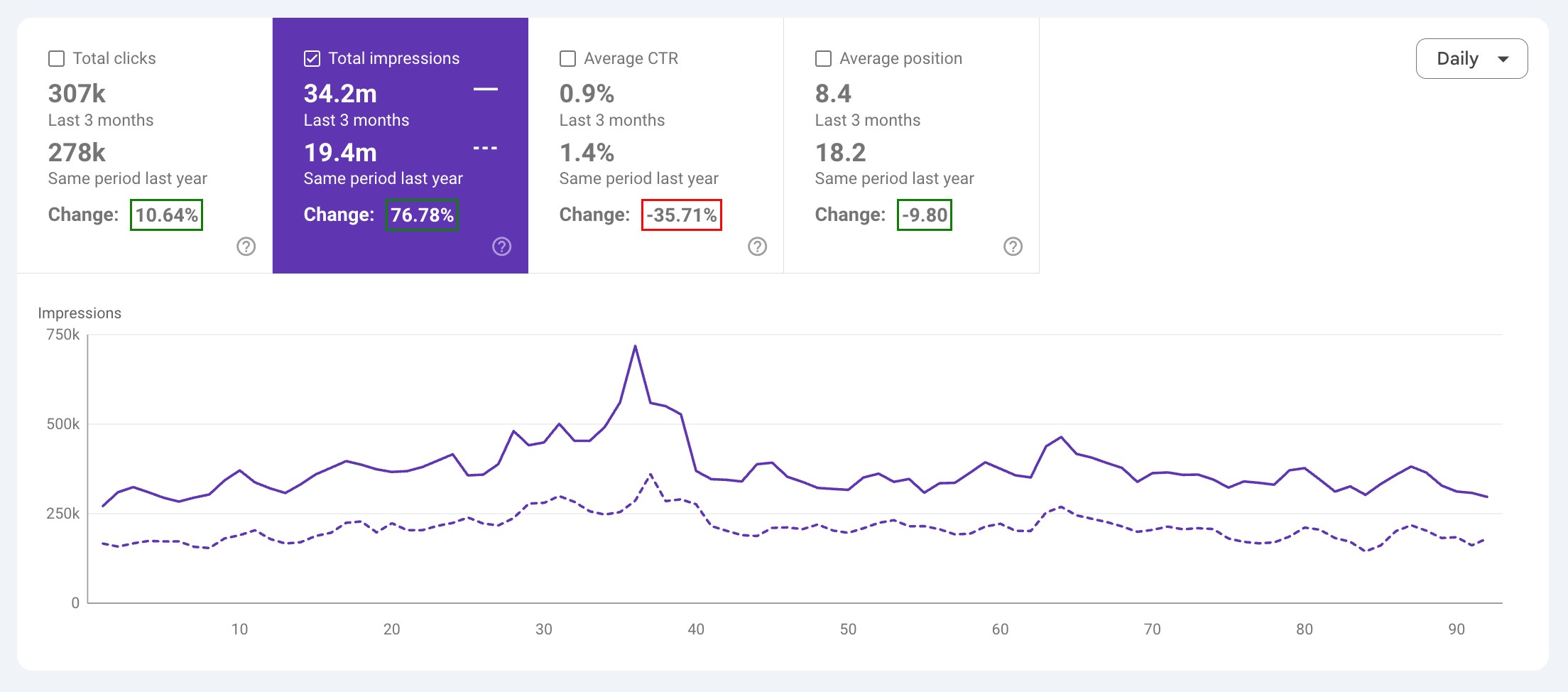
That question shaped a PPC review where I identified over £35,000 of wasted annual spend. The account looked healthy from a distance. Spend was consistent, traffic volumes were strong, and leads were coming through. But the sales team was frustrated, and that tension was the first signal that the numbers inside the ad platform were not telling the full story.
Why the PPC account looked healthy but was not delivering enough value
The account had been managed before my involvement and, from a distance, it did not look broken.
Keyword coverage was broad. Impression share looked stable. Traffic volume was strong. There were leads coming in, and the ad platform had enough conversion data to suggest the campaigns were doing something useful.
But PPC performance cannot be judged by platform activity alone.
The issue became clearer when I looked beyond the account itself. The sales team was spending time on enquiries that were unlikely to progress. Some leads had no real buying intent. Others were loosely connected to what the business offered but were not commercially useful. On paper, the account was generating conversions. In practice, too many of those conversions were creating work rather than value.
That is often where wasted PPC spend hides.
It does not always appear as an obvious technical failure. It can sit inside campaigns that look active, busy and defensible until the lead quality is checked properly.
The question I asked before changing the account
Before making changes inside the PPC account, I pulled a full year of qualified lead data from the CRM.
I wanted to understand where the good leads were coming from, not just which campaigns and keywords were producing form fills.
That meant reviewing which enquiries progressed into meaningful sales conversations, which stalled early, and which never aligned with the customer profile in the first place. I also paid close attention to the feedback from the sales team, because they were seeing the downstream impact of PPC decisions before it showed up clearly in the marketing data.
This step is easy to skip. It should not be.
If PPC reporting stops at conversions, it can reward the wrong activity. A campaign can look successful because it is generating enquiries, while the business sees something different entirely: wasted time, poor-fit leads, and budget being spent on demand that was never likely to convert into revenue.
What the data made impossible to ignore
Once I mapped qualified leads back to campaigns and keywords, the issue became clear.
A large section of the account, responsible for roughly £35,000 of advertising spend across the previous year, had delivered no qualified leads at all.
That spend had generated traffic. It had generated in-platform conversions. It had created reporting activity. But once the data was checked against CRM outcomes and sales feedback, it had not produced meaningful commercial value.
The keywords behind that spend were not completely irrelevant. That is what made the issue more subtle. They were loosely connected to the sector and could plausibly attract clicks. But they were poorly aligned with the level of intent required to become a useful lead.
They produced activity, not outcomes.
They also created a hidden cost. The business was not only paying for the clicks. The sales team was also spending time handling enquiries from people with no real commitment, insufficient budget, or poor alignment with the offer.
That kind of waste can stay hidden for a long time if PPC data is not connected to CRM insight and sales reality.
How low-intent spend hides behind good-looking metrics
Low-intent PPC spend survives because it often looks productive.
The account can show strong click volume, stable impression share, a steady flow of conversions and enough data to make the campaigns appear healthy. If reporting only focuses on what happens inside the ad platform, relevance issues are easy to miss.
That is why I am cautious when PPC performance is described only through clicks, impressions, conversions and cost per conversion.
Those numbers matter, but they do not prove commercial value on their own. A low cost per lead is not necessarily good if the leads are poor. Strong traffic volume is not necessarily good if it fills the funnel with people the business should not be speaking to. Even high impression share can be a problem if the account is showing prominently for the wrong searches.
No bidding strategy, automation or smart targeting can compensate for poor intent alignment.
This is where judgement matters. Knowing when traffic is actively harming performance is just as important as knowing how to grow it.
Why I chose to cut spend instead of optimise around it
Once the evidence was clear, I recommended a decisive reduction in spend across the low-intent areas of the account.
This was not about making a cautious bid adjustment or rewriting ad copy to see whether the traffic could be rescued. The data showed that a large section of the account had been given a full year to prove its value and had failed to produce qualified leads.
In practical terms, this meant cutting around 90% of the budget tied to keywords that had never produced a qualified lead.
That decision is uncomfortable for some stakeholders because it usually means accepting a sharp drop in traffic and impressions. But the point of PPC is not to keep dashboards busy. The point is to create commercially useful demand at an acceptable cost.
In this case, cutting spend was the more responsible decision.
It protected budget, reduced noise for the sales team, and allowed attention to move towards the areas of the account that were already connected to real opportunities.
What changed once the wasted spend was removed
The impact became visible quickly.
Within the first couple of weeks, despite a major reduction in advertising spend, qualified lead volume remained consistent with what had been seen previously. The sales team also noticed an improvement in lead quality, with fewer poor-fit enquiries taking up time.
Cost per qualified lead improved, but the more important shift was confidence.
The account no longer felt busy for the sake of being busy. Spend was being concentrated where there was stronger intent, clearer relevance and a better chance of commercial return.
That confirmed what the data had already suggested: the £35,000 of spend was not contributing meaningfully to growth.
It had been buying volume. It had not been buying value.
What the first two weeks of data confirmed
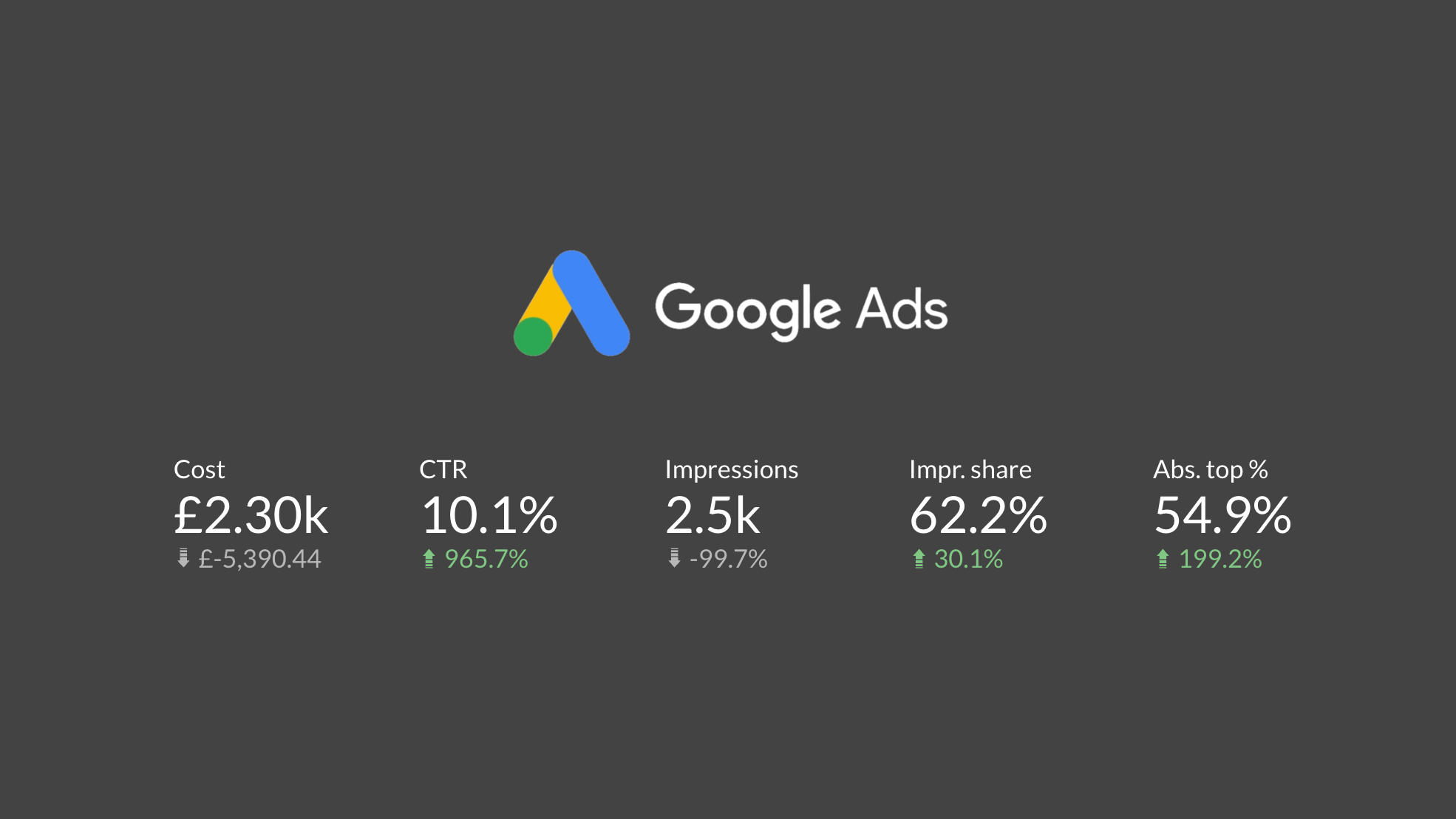
To sense-check the decision quickly, I compared the first 14 days after the changes with the same period from the previous year.
I was not looking for a polished success story after two weeks. That would have been too simplistic. I wanted to see whether the account was behaving as expected once the low-intent spend had been removed.
The shift was clear.
Spend for the 14-day period came in at around £2,300, compared with just under £7,700 for the same period the previous year. That represented a saving of more than £5,000 in two weeks alone.
Click-through rate increased to more than 10%, reflecting the tighter set of searches the ads were now appearing against. Impressions dropped sharply, but that was intentional. The account was no longer appearing for broad, low-intent queries that had previously created volume without commercial value.
Despite the reduction in impressions, impression share increased to more than 60%, and absolute top position visibility improved. With wasted spend removed, budget could be concentrated on the searches that mattered most, allowing the account to appear more consistently and more prominently where intent was strongest.
The improved click-through rate also supported ad rank, helping to stabilise cost per click and reinforce visibility in the right places.
Most importantly, qualified lead volume did not drop.
That was the point of the exercise. The goal was not to make the account cheaper in isolation. It was to remove spend that was not contributing to useful outcomes while protecting the demand that mattered.
How I treated the saving after the cut
Removing wasted spend is only useful if the account becomes more focused afterwards.
I did not see the saving as spare budget to spend for the sake of it. The point was to protect the money that had been leaking into poor-fit searches and make the remaining activity more commercially disciplined.
The first priority was high-intent search.
Historic performance data showed which keywords had contributed to qualified leads in the past, so those areas deserved more attention than the broader terms that had been creating noise. I used that insight to prioritise stronger visibility around the searches most closely linked to real opportunities.
That meant focusing budget, tightening messaging, and making sure the account was not spreading itself too thinly across low-value demand.
The aim was not to maximise traffic. It was to capture more of the demand that had a stronger chance of becoming commercially useful.
The saving also changed the conversation. Instead of asking how to make a noisy account slightly more efficient, the question became how to build from a cleaner base. That is a much healthier place to make PPC decisions from.
Practical takeaways from the PPC review
There are a few lessons from this project that apply to many PPC accounts, especially in lead generation.
-
Do not stop reporting at conversions A conversion is not the same as a qualified lead. PPC reporting needs to show whether enquiries are moving towards revenue, not just whether forms are being submitted.
-
Use CRM and sales data before making major decisions The ad platform can show what happened before the enquiry. CRM and sales data show whether that enquiry was worth having.
-
Look for waste hiding inside apparently healthy campaigns Stable spend, strong traffic and consistent conversions can still mask poor commercial performance if the wrong searches are driving activity.
-
Do not be afraid to cut spend when the evidence supports it Optimisation is not always the answer. Sometimes the right decision is to stop funding activity that has already proved it is unlikely to deliver value.
-
Measure cost per qualified lead, not just cost per conversion A lower cost per conversion can be misleading if the lead quality is poor. Cost per qualified lead gives a more honest view of efficiency.
-
Protect the sales team’s time Poor-fit leads do not only waste media budget. They also create operational drag by pulling sales teams into conversations that were never likely to progress.
-
Reinvest savings with intent Removing waste creates options, but it should not create another excuse to spend loosely. Start by strengthening the parts of the account already connected to qualified demand, then consider wider activity only from that cleaner base.
These takeaways are simple, but they change how PPC performance is judged. The question becomes less about whether the account is active and more about whether it is useful.
Final perspective
This case study matters because it shows how easily wasted PPC spend can hide behind respectable platform metrics.
The account was spending money. It was generating traffic. It was producing conversions. But a meaningful portion of that activity was not creating qualified opportunities for the business.
Saving more than £35,000 did not come from a complex tactic. It came from connecting PPC activity to sales reality, trusting the evidence, and being willing to reduce spend where the data showed it was not working.
That is the part of PPC management that often gets overlooked.
Growth matters, but so does restraint. The best decision is not always to spend more, test more or optimise harder. Sometimes the strongest move is to stop paying for demand that was never going to become valuable in the first place.