
AI search is already changing how buyers research brands, compare options and build shortlists. The difficult part for most businesses is that they still do not have a clear way to measure what is happening.
That has been one of the biggest shifts in search over the past year. Clients are no longer only asking where they rank on Google. They are asking what ChatGPT, Gemini, Perplexity and Google AI Overviews say about them. They want to know whether their brand is visible, whether it is being described accurately, and whether competitors are being recommended ahead of them.
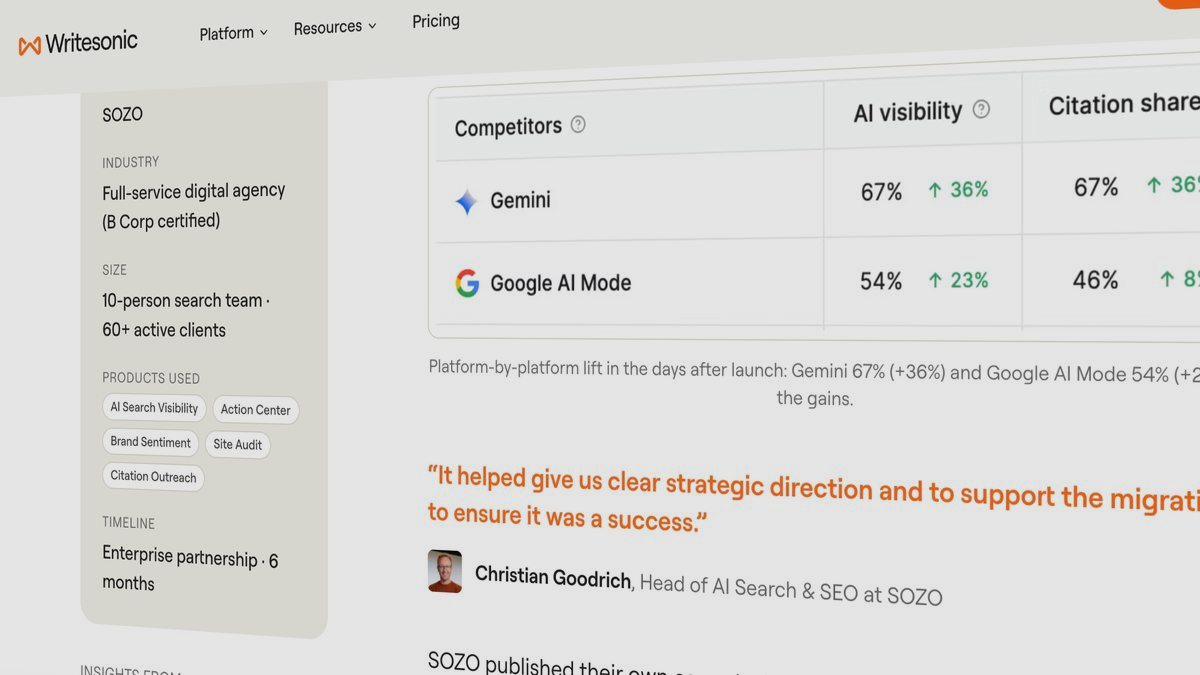
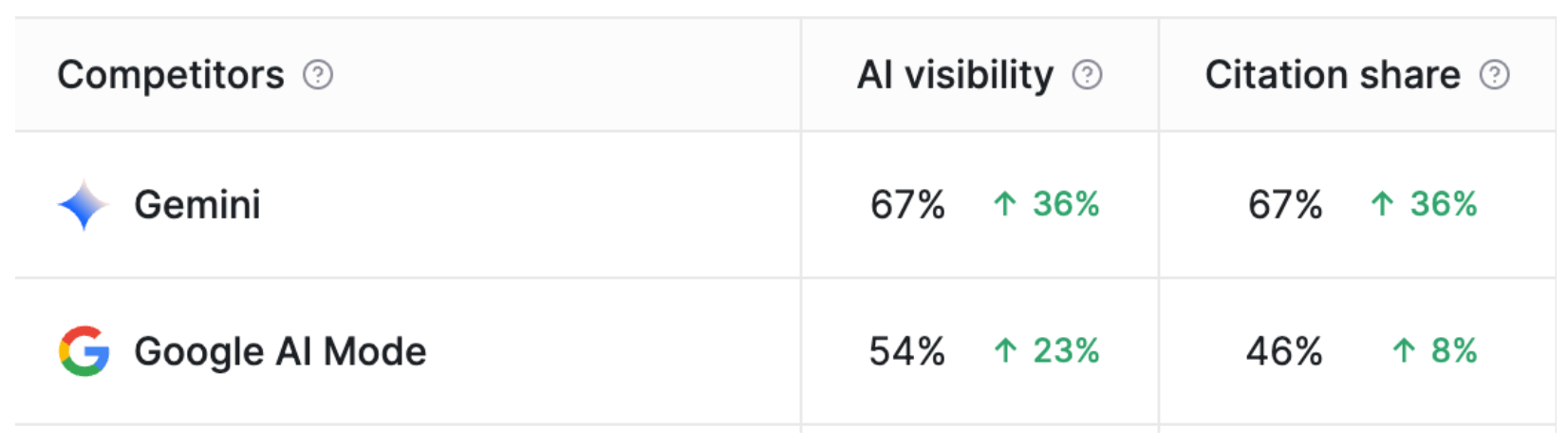
Recently, I collaborated with the Writesonic team on a customer case study about how SOZO is using its platform to measure AI search visibility across our client portfolio. The interview covered my experience working with Writesonic, how AI search measurement now fits into our workflow, and a Magento to Shopify migration where Google Gemini visibility increased by 30% in the days following launch.
You can read the Writesonic case study here: How SOZO lifted client Gemini visibility +30% through a migration
I wanted to share some extra context from my side as Head of AI Search & SEO at SOZO: what the collaboration involved, what it has shown us, and why AI search measurement is starting to change the way we plan search projects for ecommerce and lead generation brands.
The measurement gap that changed the conversation
For a long time, the search measurement conversation was familiar. Rankings, impressions, clicks, sessions, conversions and revenue all gave us a way to understand performance, even if the picture was never perfect.
AI-driven search has changed that.
A buyer can now ask an AI platform for product recommendations, supplier comparisons, service provider shortlists or category-level advice before they ever reach a website. In that moment, your brand might be included, ignored, misrepresented, or described through the lens of third-party sources you do not control.
That creates a very practical problem for search teams.
If you cannot see how AI platforms are describing a brand, you cannot know whether the brand is visible in the moments where buyers are researching. You also cannot know which competitors are being recommended, which sources are shaping the answers, or whether a recent site change has helped or harmed discoverability.
That is why AI search visibility has moved so quickly from an interesting topic to something we need to measure properly.
What AI search visibility means in practice
AI search visibility is not just a question of whether a brand appears in a response.
The more useful questions are:
- Is the brand being surfaced for commercially relevant prompts?
- Which competitors are appearing alongside or instead of it?
- How is the brand being described?
- Is the sentiment positive, neutral, inaccurate or misleading?
- Which pages, reviews, articles, forums or third-party sources are influencing the answer?
- Does visibility improve or decline after a migration, content project or technical change?
Those questions matter because AI platforms are not simply showing links. In many cases, they are summarising, comparing and recommending. That makes the quality of the answer commercially important.
For ecommerce brands, this might influence whether a product range enters the shortlist. For lead generation businesses, it might shape whether a buyer sees a company as credible before making an enquiry.
This is where AI search measurement becomes useful. It gives the team a baseline, a competitor view and a way to track whether the work is moving visibility in the right direction.
How Writesonic fits into the SOZO workflow
One of the main points I spoke about during the Writesonic interview was scale. We needed a way to measure AI visibility consistently across a wide client portfolio. We were not looking for a one-off report for one or two large accounts. We needed something that could scale across ecommerce and lead generation brands with different markets, products, services and commercial priorities.
The platform now supports several parts of the workflow.
Before major site changes, we can establish a baseline across platforms such as ChatGPT, Gemini, Google AI Overviews and Perplexity. After launch, we can see how visibility has moved.
The Action Center helps surface technical, content and citation opportunities that may affect AI discoverability. It also shows which external sources are influencing competitor visibility, which is useful when planning content, digital PR or outreach.
Brand Sentiment has become one of the more valuable parts of the conversation with clients. Instead of only talking about rankings, we can look at how AI platforms describe the brand, whether that description is accurate, and what might need to change to improve how buyers perceive the business before they land on the site.
The real test: a Magento to Shopify migration
One of the projects we discussed in the Writesonic case study was a Magento to Shopify migration for a substantial ecommerce brand with thousands of SKUs and hundreds of collections.
I have worked on SEO for this brand for the past 17 years, from its early days as an ecommerce startup through to its current position competing with household names such as John Lewis. That history matters. On a migration of this size, search performance is not protected by a checklist alone. It depends on understanding the brand, the category, the product range, the technical history and the commercial priorities behind the site.
It was also a proper team effort. I worked closely with Joshua from the SEO team, our development team and Lois, our account strategist. Writesonic also played an important role in helping us measure and interpret AI visibility throughout the process. On a project like this, SEO cannot sit in isolation. The technical, strategic, development and client-facing decisions all need to connect.
That joined-up approach gave us a clearer view of what needed protecting before launch. We could look at the prompts, pages, product areas and sources that were contributing to AI discoverability, then make sure those signals were considered as part of the migration planning.
What the results showed
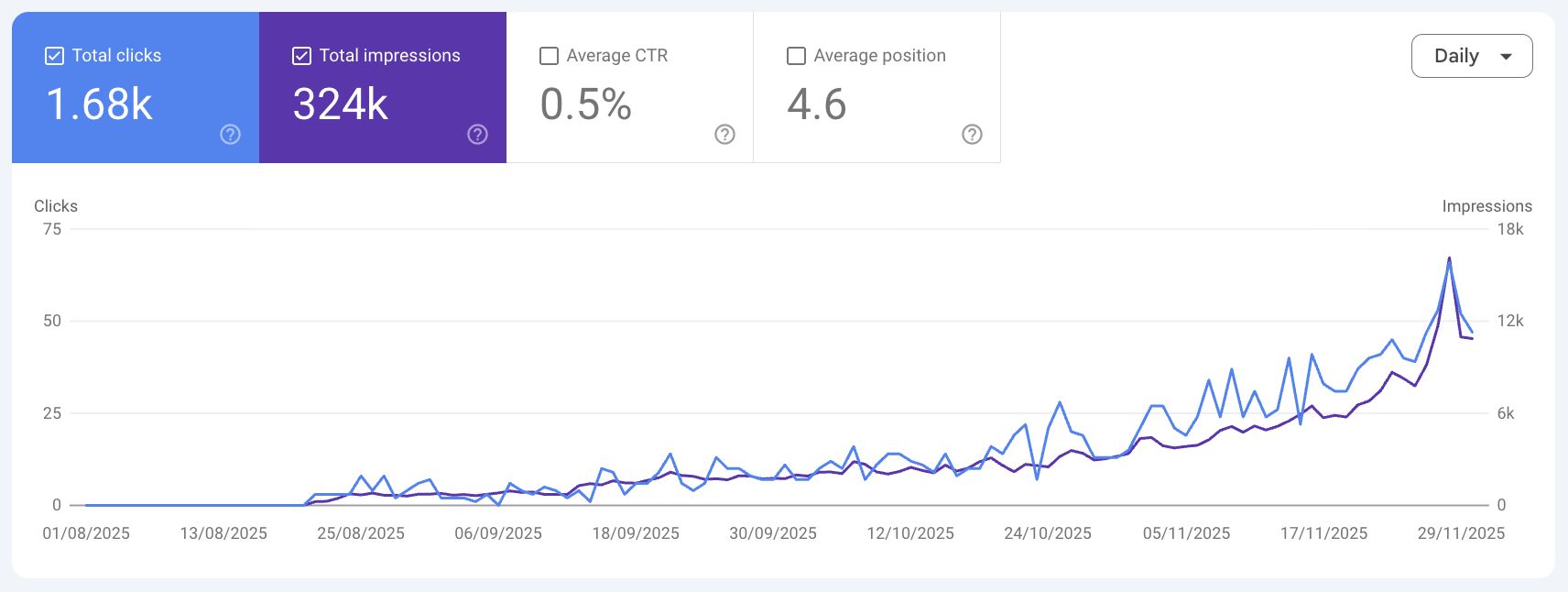
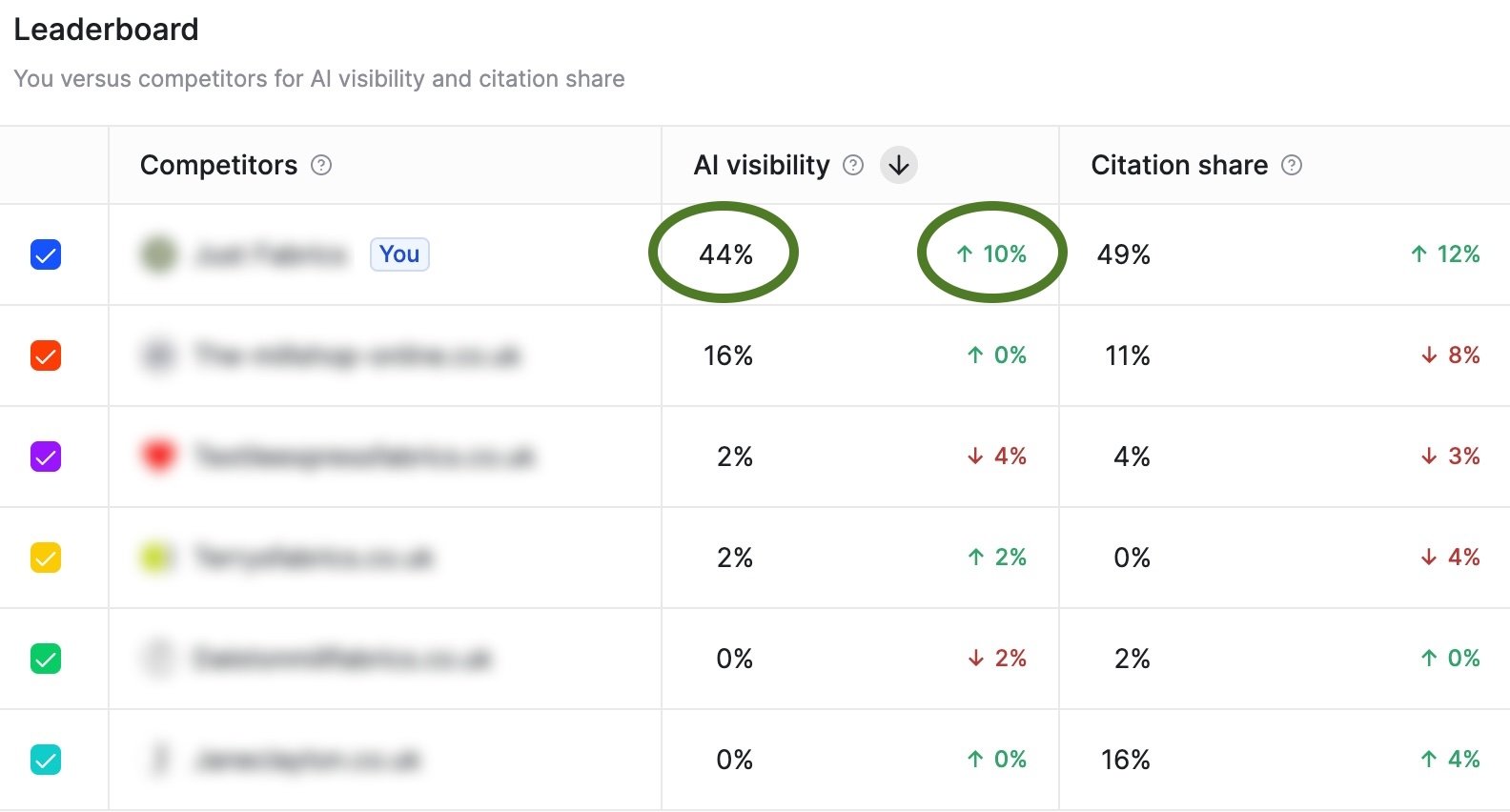
Within 30 days of launch, AI visibility increased by 10% across all tracked AI platforms. Google Gemini visibility increased by 30% in the days immediately after launch.
Those numbers are important, but the measurement process behind them is the more useful lesson.
A migration of this scale creates risk. URL structures change. Collections are rebuilt. Product data moves. Internal links shift. Metadata, copy, filters, schema and indexation all need careful handling.
In traditional SEO, those decisions can affect rankings, traffic and revenue. The same decisions can now affect how AI platforms understand, cite and describe a brand.
Because we had measured AI visibility before launch, we were not left trying to interpret the results afterwards without context. We could see what had changed, where visibility had improved, and how the migration had affected discoverability beyond traditional search results.
That changes the migration conversation. It is no longer only “did traffic hold up?” It also becomes “did the brand become easier to understand and surface across the places buyers are now researching?”
For commercial teams, that is a much better question.

Why this matters for ecommerce brands
For ecommerce brands, AI search visibility creates a clear commercial risk.
A customer might ask which brand sells the best made-to-measure curtains, which sustainable skincare brand is worth trying, which outdoor furniture is best for a small garden, or which supplier offers a specialist product.
If competitors appear in those answers and your brand does not, you may never enter the shortlist.
The opportunity is that many ecommerce brands already have useful raw material. They have product data, collection pages, reviews, buying guides, delivery information, FAQs, comparison points and trust signals.
The problem is that this information is often fragmented, thin, buried, technically inconsistent, or written only with traditional search snippets in mind.
Better AI search visibility usually starts with the same kind of work that makes search stronger overall: clearer information architecture, stronger collection and product content, better structured data, more useful buying guidance, cleaner handling of discontinued products, stronger review signals and credible external citations.
None of this replaces SEO. It raises the standard of what good SEO needs to account for.
Why this matters for lead generation brands
Lead generation brands face the same challenge, but the journey is often less direct.
A prospect might ask an AI platform to shortlist Shopify migration specialists for a multi-store ecommerce brand, compare B2B SEO consultants with experience in technical migrations, or explain which type of search partner they need before they are ready to enquire.
By the time someone lands on the website, a perception may already have been formed. The brand may feel credible, vague, expensive, specialist, generic, trusted or irrelevant before the first click.
AI search measurement helps answer questions that standard analytics cannot:
- Is the brand being surfaced for commercially relevant research moments?
- Are competitors being positioned more clearly?
- Is the offer being understood properly?
- Are the right sectors, services and proof points being associated with the brand?
- Which external sources are influencing those answers?
For any business where trust is built before the first conversation, those questions matter.
The attribution gap is real
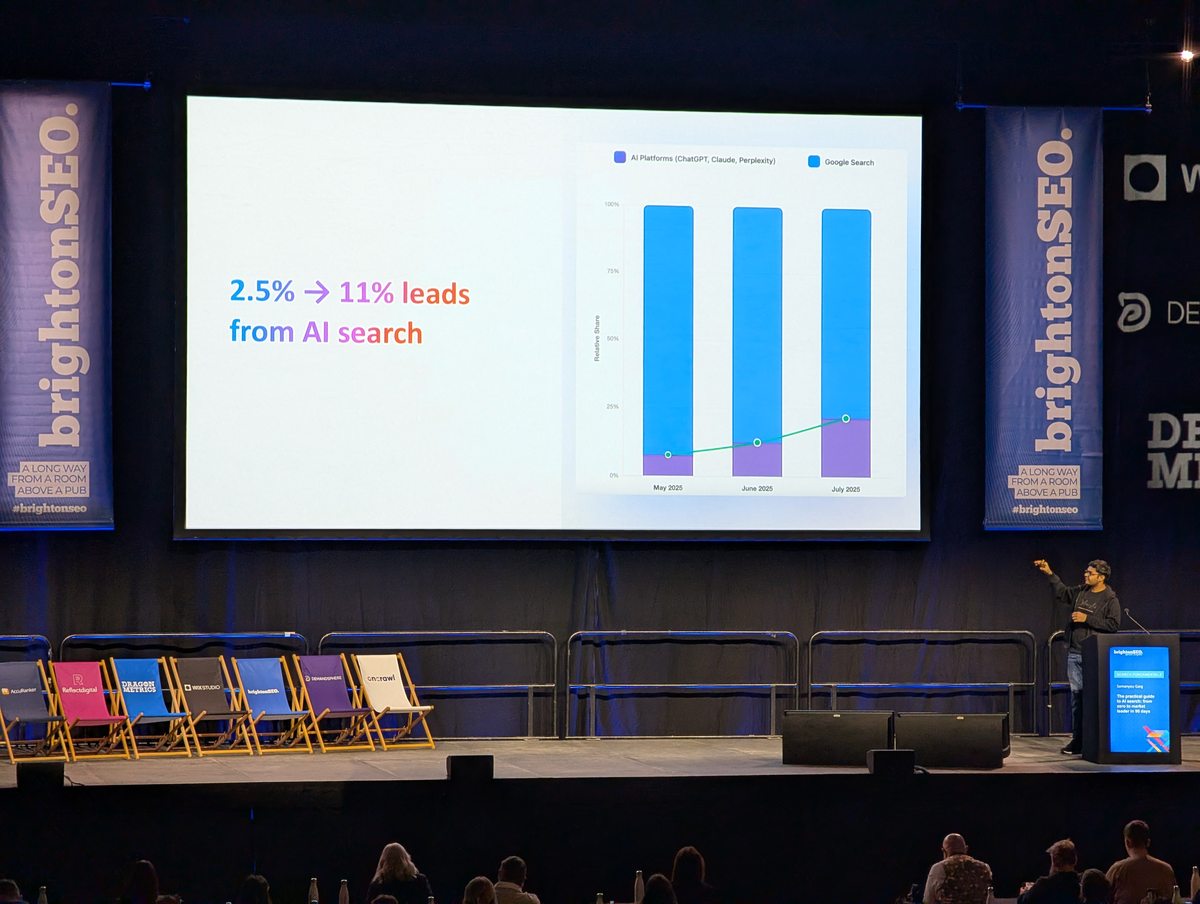
The hardest question is still the commercial one: how does AI visibility affect revenue and leads?
That is a fair question. It is also difficult to answer cleanly at the moment.
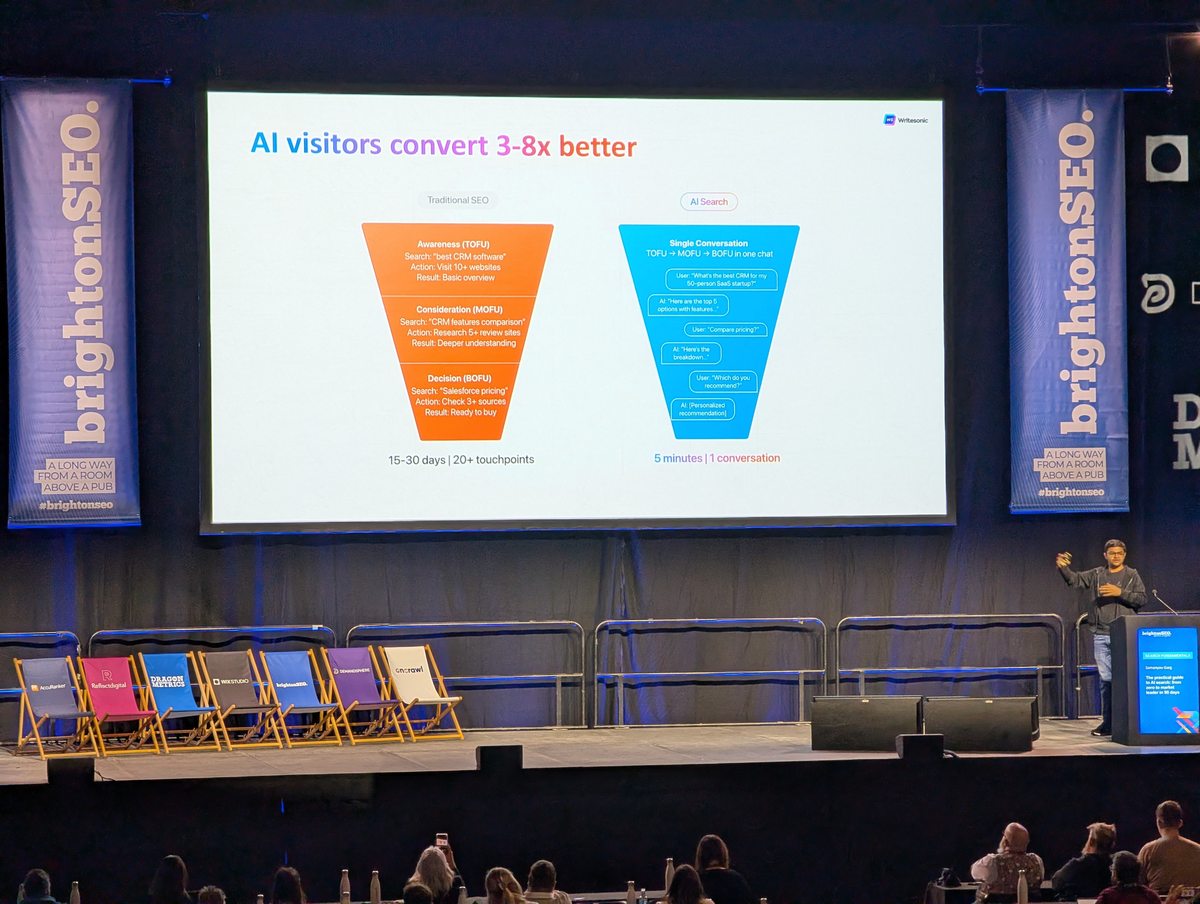
AI search can shape preference before a user clicks, searches again, visits directly, converts through paid search, or comes back through another channel. Most reporting models are built around visible touchpoints, while AI search can influence the decision before that touchpoint exists.
I do not think it helps to overclaim here. AI search should currently be treated as a discovery and consideration channel, with measurement used to understand visibility, sentiment, competitor positioning and likely influence.
The evidence base can still be useful. I would look at visibility changes, citation share, sentiment, branded search demand, direct traffic, assisted conversions, lead quality, conversion rate movement and sales feedback. No single metric gives the full answer. Together, they build a more useful picture.
The mistake is waiting for perfect attribution before doing anything.
By the time measurement becomes cleaner, some brands will already have built a stronger presence across AI-led discovery. Others will be asking why competitors are being recommended ahead of them.
What I would measure before a major site change
For any ecommerce or lead generation brand planning a migration, redesign or major content restructure, I would want a clear AI search visibility baseline before decisions are locked in.
That baseline should cover:
- Priority commercial topics and prompts
- Brand visibility across key AI platforms
- Competitor visibility and citation share
- Sentiment and accuracy of brand descriptions
- Sources being used to support AI answers
- Pages, content types and external mentions most likely to influence discoverability
This does not need to become a bloated strategy exercise. It needs to be focused enough to guide decisions.
Which pages need protecting? Which collections or service pages need strengthening? Which third-party sources are helping or hurting? Which competitors are being understood better? Which parts of the brand story are missing?
Those are the questions that should influence a migration plan before launch, not after performance starts moving.
Practical takeaways
The main lesson from collaborating with Writesonic on this case study is not simply that one migration produced an uplift in AI visibility.
The lesson is that AI search can be measured, monitored and built into existing search work.
I would treat AI visibility as part of the planning stage for any major search project, whether that is a migration, a content restructure, a digital PR campaign or a wider review of how well the brand is understood across AI platforms.
Then measure it again after the work goes live.
That discipline turns AI search from a vague talking point into something marketing teams can act on.
Final thoughts
What stood out to me from this project was not just the uplift itself. It was the difference that proper measurement made to the decisions around it.
During a large migration, there are always competing priorities. Development resource, content decisions, redirects, collection structures, product data and commercial deadlines all have to be balanced. AI visibility gave us another evidence point to work from, not as a replacement for traditional SEO, but as an extra layer of search measurement that now matters.
That is the part I think more brands need to pay attention to. If AI platforms are influencing how buyers understand a market, compare options and decide who belongs on a shortlist, then visibility in those environments cannot be left unmeasured.
Attribution still needs to improve. I do not think anyone should pretend otherwise. But waiting for perfect attribution before measuring AI visibility would be the wrong lesson to take from where search is heading.
I’ll be sharing more SEO and AI search thoughts on LinkedIn, including what I am learning from working with Writesonic across live client projects at SOZO. Connect with me on LinkedIn for practical insight into how AI search measurement is developing and what it means for brands that want to stay ahead of how buyers are researching.