
SEO ROI used to be easier to explain.
You invested in content, technical fixes and links. Rankings improved. Organic traffic increased. Leads or sales followed. The board could see a neat upward line and, most of the time, that was enough.
That is no longer good enough.
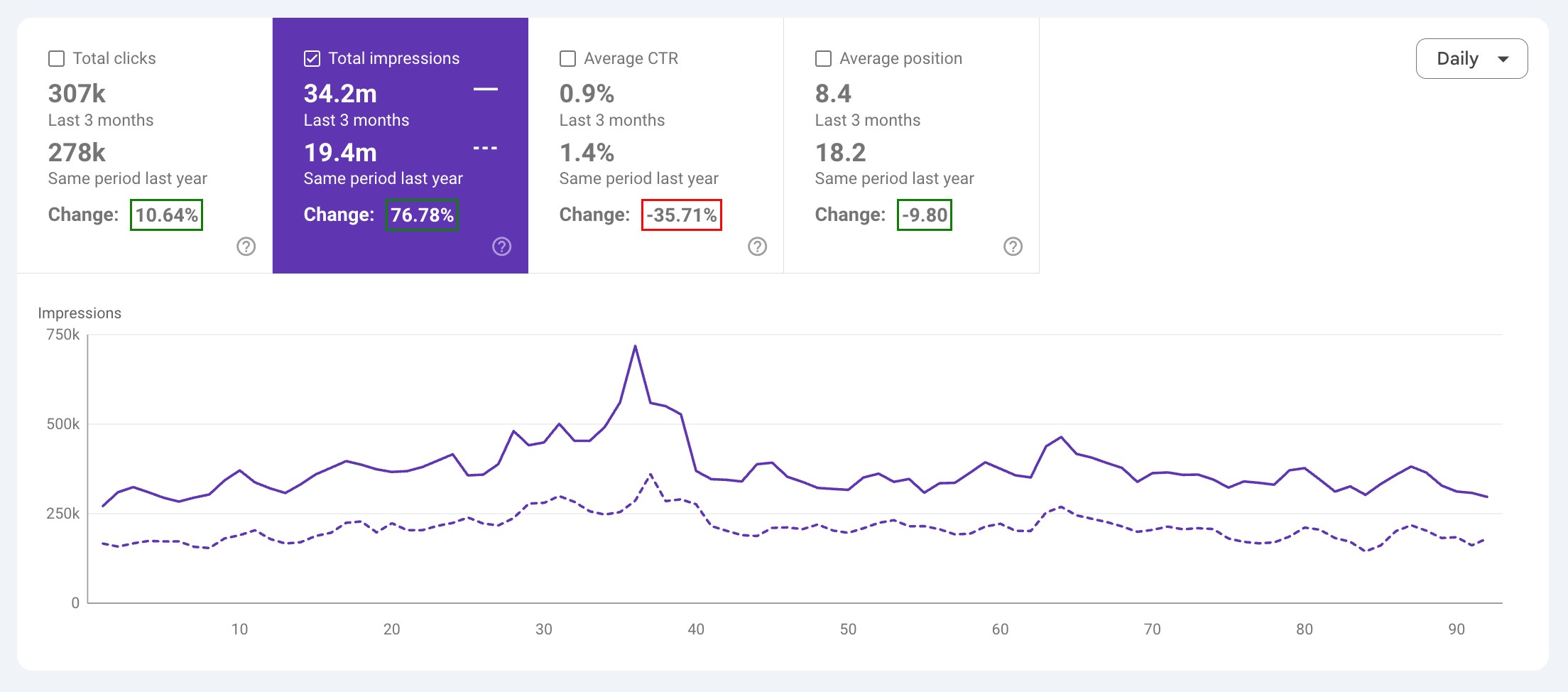
Search behaviour has changed. AI-generated summaries, zero-click results, fragmented buying journeys and more complex attribution have made traditional SEO reporting less reliable on its own. Search Console still reports clicks, impressions, CTR and average position, but those metrics need careful interpretation because search result layouts and visibility rules are not as simple as “rank higher, get more clicks”.
That does not mean SEO ROI is impossible to calculate. It means the calculation has to move closer to commercial reality.
The practical question is not “How much traffic did SEO generate?” It is “How much profitable business did organic search help create, and was that return worth the investment?”
That is the question this guide answers.
What SEO ROI actually means
SEO ROI is the return generated from organic search activity compared with the cost of that activity.
At its simplest, the formula is:
SEO ROI = (SEO return - SEO cost) / SEO cost x 100
For example, if SEO activity costs £40,000 and creates £120,000 in gross profit, the ROI is:
(£120,000 - £40,000) / £40,000 x 100 = 200% ROI
That means every £1 invested returned the original £1 plus £2 in profit.
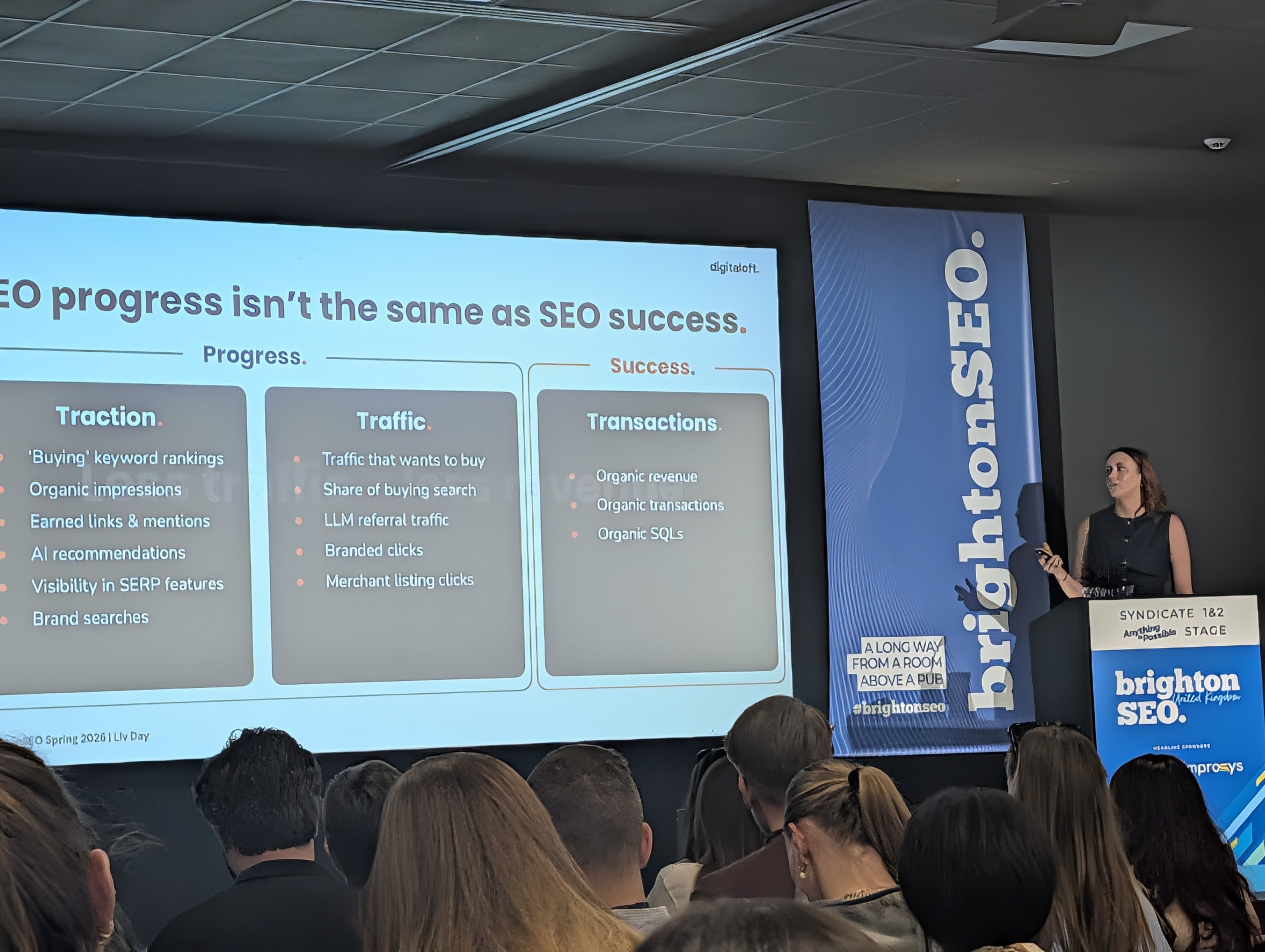
The important point is that SEO return should not automatically mean traffic value, ranking value or estimated media value. Those can be useful indicators, but they are not the same as business return.
Useful SEO ROI measurement should connect organic activity to at least one of these:
- Revenue
- Gross profit
- Qualified pipeline
- Sales-qualified leads
- Customer acquisition cost
- Lifetime value
- Retention or expansion revenue
- Reduction in paid media dependency
- Better conversion quality
- Shorter sales cycles
- Improved sales enablement
Traffic still matters. Rankings still matter. Impressions still matter. But they are not the final outcome.
They are only useful when they help explain whether SEO is creating commercially valuable demand.
The basic SEO ROI formula
The cleanest version of the formula is:
SEO ROI = (Profit from organic search - SEO investment) / SEO investment x 100
You can also calculate it using revenue:
SEO ROI = (Revenue from organic search - SEO investment) / SEO investment x 100
However, profit is usually the better measure.
Revenue can make SEO look stronger than it really is if margins are low, fulfilment costs are high or lead quality is poor. Profit forces a more honest view.
For ecommerce, the calculation is usually more direct:
Organic revenue x gross margin = organic gross profit
For lead generation, the calculation takes more work because you need to connect organic leads to sales outcomes.
A practical lead generation version looks like this:
Organic leads x lead-to-customer rate x average deal value x gross margin = estimated organic profit
A more advanced version uses CRM data:
Closed-won organic deals x gross profit per deal = confirmed organic profit
That is usually the most useful version when the data is available.
What to include in SEO investment costs
A common SEO ROI mistake is undercounting cost.
SEO cost is not just the monthly agency fee, consultant fee or internal salary. It is the total investment required to produce the result.
Include:
- SEO strategy time
- Technical SEO work
- Content planning
- Content writing
- Content editing
- Design and development support
- Digital PR or link acquisition
- SEO tools
- Analytics and reporting setup
- Internal stakeholder time
- Product, sales or subject matter expert input
- Website fixes needed to support SEO performance
This matters because SEO often uses time from people who are not labelled as “SEO resource”.
For example, a technical SEO recommendation may require developer time. A strong B2B article may require input from sales, product or leadership. A conversion improvement may need design and analytics support.
Those costs are real.
The calculation does not need to become impossibly detailed, but it should be commercially honest.
A simple cost table might look like this:
| Cost item | Monthly cost |
|---|---|
| SEO consultancy or agency | £4,000 |
| Content production | £3,000 |
| Developer support | £1,500 |
| SEO tools | £500 |
| Internal team time | £2,000 |
| Total monthly SEO investment | £11,000 |
If the total monthly investment is £11,000, annual SEO investment is £132,000.
That is the number ROI should be judged against.
How to calculate organic revenue
For ecommerce, SaaS self-serve and other direct purchase models, organic revenue is usually easier to measure.
You need to identify:
- Revenue from organic landing pages
- Revenue from organic sessions
- Revenue from first-touch organic visitors
- Revenue from returning users who originally arrived through organic search
- Revenue influenced by organic content before conversion
A practical approach is to separate three views.
Last-click organic revenue
This shows revenue where organic search was the final channel before conversion.
It is useful, but often too narrow.
First-touch organic revenue
This shows revenue where organic search first introduced the user to the business.
This is especially useful for SEO because informational and comparison content often starts the buying journey.
Assisted organic revenue
This shows revenue where organic search played a role but was not the final conversion channel.
This is important because many buyers do not convert on their first organic visit. They may return through paid search, direct, email, social or sales outreach.
No single attribution view is perfect. The point is to compare them and understand the pattern.
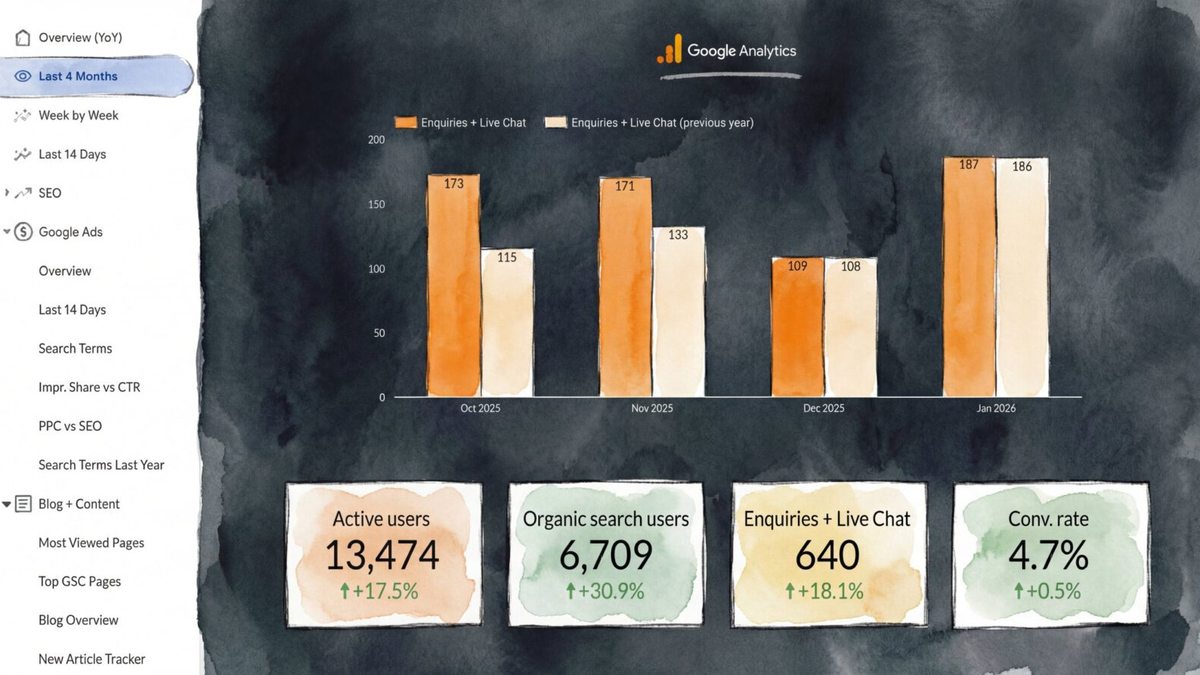
If organic search performs well in first-touch and assisted views but looks weak in last-click reporting, that does not mean SEO is failing. It may mean SEO is doing demand creation rather than final conversion capture.
How to calculate SEO ROI for lead generation
Lead generation SEO is where ROI measurement often becomes messy.
The problem is simple: not all leads are equal.
A form submission from a student, a competitor, a tiny company outside your target market and a high-intent enterprise buyer may all appear as one “conversion” in analytics.
Commercially, they are very different.
That is why lead generation SEO should not stop at conversion volume. It needs CRM feedback.
A better calculation uses lead stages:
| Metric | Example |
|---|---|
| Organic website leads | 300 |
| Marketing-qualified leads | 120 |
| Sales-qualified leads | 60 |
| Opportunities created | 25 |
| Closed-won customers | 8 |
| Average deal value | £18,000 |
| Gross margin | 60% |
Using this example:
8 customers x £18,000 = £144,000 revenue
Then apply margin:
£144,000 x 60% = £86,400 gross profit
If SEO investment was £40,000:
(£86,400 - £40,000) / £40,000 x 100 = 116% SEO ROI
This is much more useful than saying:
“SEO generated 300 leads.”
The better question is:
“How many of those leads became profitable customers?”
That is where SEO reporting becomes commercially useful.
Why margin matters more than revenue
Revenue can hide weak performance.
Imagine two SEO campaigns:
| Campaign | Revenue | Gross margin | Gross profit |
|---|---|---|---|
| Campaign A | £200,000 | 20% | £40,000 |
| Campaign B | £120,000 | 60% | £72,000 |
Campaign A looks better if you only report revenue.
Campaign B is better for the business.
This is why SEO ROI should use gross profit where possible, especially for companies with varied product margins, service margins or customer types.
The same applies to lead quality.
A campaign that brings in fewer but better-fit leads may create more profit than a campaign that creates lots of low-quality enquiries.
That is particularly important in B2B, where poor-fit leads consume sales time, inflate conversion metrics and create false confidence in the marketing dashboard.
How to account for assisted conversions
SEO often influences revenue before the buyer is ready to convert.
A buyer might:
- Search for a problem
- Read an educational article
- Leave the site
- Return later through a brand search
- Compare alternatives
- Speak to sales
- Convert after a direct visit
In a last-click report, organic search may receive no credit for the final conversion.
But without the original organic visit, the buyer may never have discovered the business.
This is why assisted conversion analysis matters.
However, assisted conversions should be used carefully. They can easily become inflated if every weak touchpoint receives too much credit.
The practical approach is to classify organic content by role:
| SEO content type | Likely commercial role |
|---|---|
| Educational guides | Demand creation |
| Problem-led content | Early-stage qualification |
| Comparison pages | Consideration and vendor selection |
| Product or service pages | Conversion capture |
| Case studies | Trust and risk reduction |
| Pricing or ROI pages | Sales enablement |
| Support content | Retention and customer success |
Then assess ROI according to the role.
An educational article may not drive immediate demo requests, but it may introduce high-value buyers into the funnel.
A comparison page may receive less traffic, but convert at a higher rate.
A technical support article may not create new customers, but it might reduce customer service demand or improve retention.
SEO ROI becomes more accurate when you stop judging every page by the same conversion expectation.
How to value non-converting SEO activity
Some SEO work does not produce direct conversions but still has commercial value.
Technical fixes may protect organic visibility. Sales-support content may answer objections before a call. A strong comparison page may improve conversion rates across paid, organic and direct traffic. Organic growth may also reduce reliance on paid search for queries where the business now has strong natural visibility.
The key is to value this contribution without exaggerating it.
A practical approach is to separate SEO value into three categories:
| Value type | What it includes |
|---|---|
| Direct SEO return | Revenue or profit directly attributed to organic search |
| Influenced SEO return | Revenue where organic search assisted the journey |
| Operational SEO value | Cost savings, sales support, reduced paid dependency or improved conversion performance |
Keep these separate. Do not blend them into one inflated number.
The distinction builds trust.
Common SEO ROI mistakes
Treating traffic as ROI
Traffic is not ROI.
Traffic is only valuable if it contributes to revenue, profit, qualified pipeline, lower acquisition costs or another meaningful business outcome.
A 50% traffic increase can still be commercially weak if the extra visitors are poor-fit, low-intent or outside the target market.

Ignoring lead quality
SEO can look successful in analytics and fail in the sales pipeline.
This usually happens when reporting stops at form fills.
The fix is to connect SEO reporting to CRM stages: MQL, SQL, opportunity, closed-won revenue and lost reasons.
Sales feedback is not a soft metric. It is essential commercial evidence.
Using paid search CPC as the only value proxy
Many SEO tools estimate traffic value based on paid search cost-per-click.
That can be useful as a directional indicator, but it is not the same as ROI.
A keyword with a high CPC may still produce poor leads. A low-volume query may produce excellent customers.
Paid media replacement value is useful, but it should not replace revenue or margin analysis.
Expecting immediate ROI
SEO usually compounds over time.
The first few months may be investment-heavy because the work involves research, technical fixes, content creation and authority building.
A fair ROI model should separate:
- Initial investment phase
- Growth phase
- Compounding phase
- Maintenance phase
Judging SEO too early can lead to bad decisions. But so can giving it unlimited time without commercial scrutiny.
The answer is not blind patience. It is staged measurement.
Reporting rankings without business context
Rankings still matter, but ranking reports are not enough.
A ranking improvement is only useful if it improves visibility for commercially relevant searches.
The better question is:
“Are we becoming more visible to the people most likely to buy, influence or recommend us?”
That is more useful than celebrating ranking gains for low-value queries.
Blending brand and non-brand performance
Brand and non-brand organic traffic should be separated.
Brand traffic often reflects existing demand created by other channels, reputation, referrals or offline activity.
Non-brand traffic is usually a better indicator of SEO’s ability to create or capture new demand.
Both matter, but they answer different questions.
A strong SEO ROI report should show:
- Brand organic performance
- Non-brand organic performance
- High-intent non-brand performance
- Informational content performance
- Organic-assisted conversions
A practical SEO ROI calculation example
Let’s say a B2B company invests in SEO for 12 months.
Annual SEO investment:
| Cost | Amount |
|---|---|
| SEO strategy and management | £48,000 |
| Content production | £36,000 |
| Developer support | £18,000 |
| Digital PR and authority building | £20,000 |
| SEO and analytics tools | £6,000 |
| Internal stakeholder time | £12,000 |
| Total SEO investment | £140,000 |
Organic performance after 12 months:
| Metric | Result |
|---|---|
| Organic leads | 900 |
| Sales-qualified leads | 180 |
| Opportunities | 70 |
| Closed-won customers | 22 |
| Average first-year revenue | £15,000 |
| Gross margin | 55% |
Revenue calculation:
22 customers x £15,000 = £330,000 revenue
Profit calculation:
£330,000 x 55% = £181,500 gross profit
SEO ROI calculation:
(£181,500 - £140,000) / £140,000 x 100 = 29.6% ROI
A 29.6% ROI in the first year can be a reasonable starting point for a content-heavy SEO programme, particularly where the initial investment includes strategy, production, technical work and authority building.
The forward-looking question is whether the assets continue to generate qualified demand with lower incremental investment. If they do, the return can improve over time. If the same content also supports sales, reduces paid search dependency or increases brand demand, that wider contribution should be discussed separately rather than folded into the core ROI number.
A good SEO ROI discussion would ask:
- Which pages generated the best opportunities?
- Which topics produced poor-fit leads?
- Which rankings are worth defending?
- Which content should be improved, consolidated or removed?
- Which organic journeys produced the highest-margin customers?
- Which sales objections appeared repeatedly in organic enquiries?
- Which paid campaigns could be reduced because organic now performs well?
That is where ROI measurement becomes decision-making, not just reporting.
SEO ROI checklist
Use this checklist before presenting SEO performance to leadership.
- Separate brand and non-brand organic performance.
- Track meaningful conversions, not just soft engagement events.
- Connect organic leads to CRM stages such as MQL, SQL, opportunity and closed-won revenue.
- Review lead quality with sales, including poor-fit enquiries and lost reasons.
- Include internal resource, content, development, tools and external support in SEO cost.
- Separate revenue from gross profit and apply margin where possible.
- Use real lead-to-customer rates instead of assumed conversion rates.
- Treat assisted conversion data as directional evidence, not absolute truth.
- Group landing pages by commercial intent and role in the buying journey.
- Base next actions on profit, pipeline quality and decision value, not traffic growth alone.
A simple SEO ROI dashboard structure
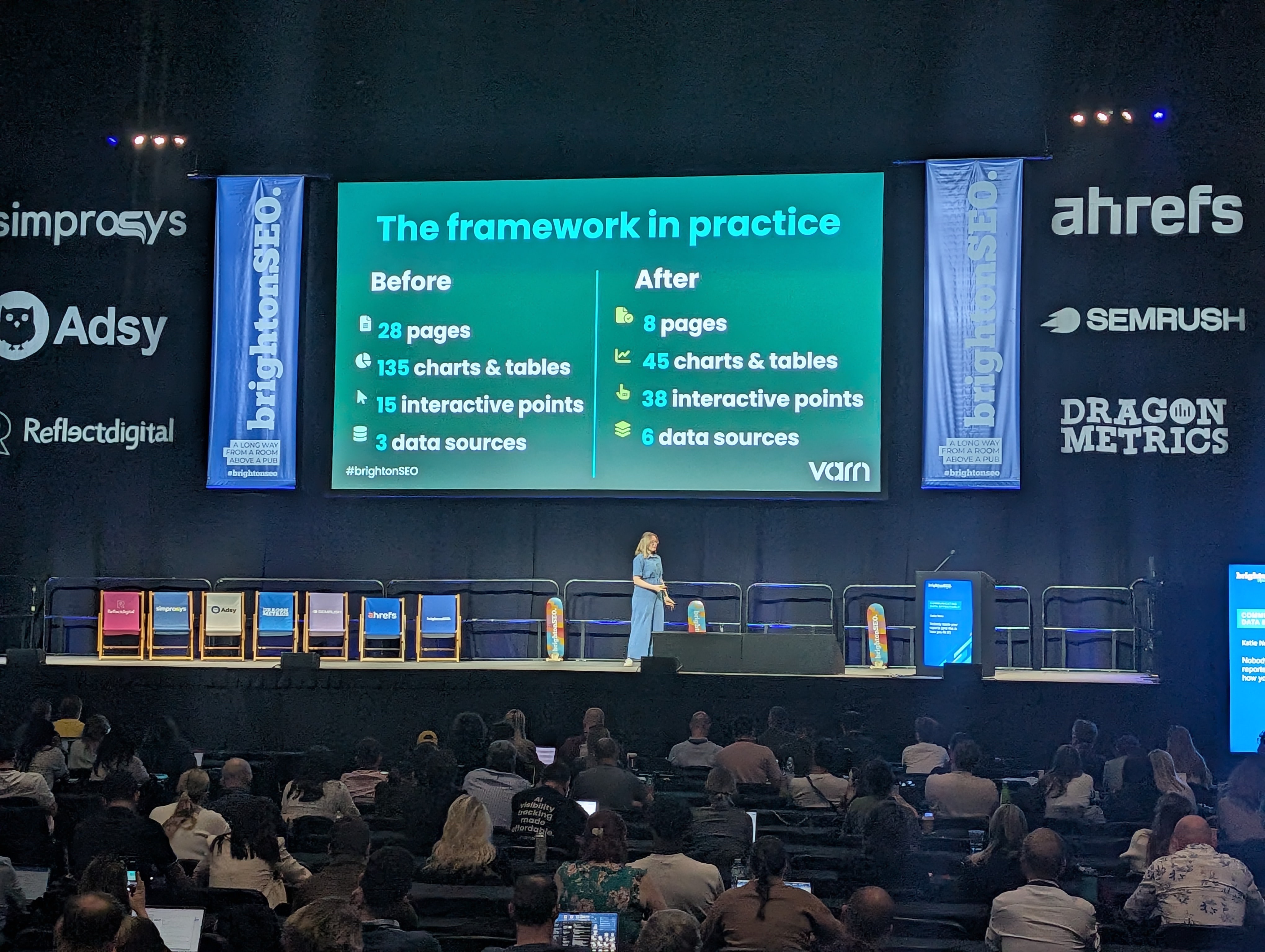
A useful SEO ROI dashboard should not overwhelm people with every available metric.
An executive-level version should focus on the numbers that support decisions:
| Dashboard section | What it answers |
|---|---|
| Organic revenue or pipeline | What commercial value did SEO create? |
| Organic gross profit | Was the value profitable? |
| SEO investment | What did it cost? |
| ROI and payback period | Was the return worth it? |
| Brand vs non-brand split | Are we creating demand or capturing existing demand? |
| Lead quality by landing page | Which content attracts the right buyers? |
| Next investment priorities | What should we do next? |
Impressions, clicks and average position still belong in SEO analysis. They just should not dominate the board-level conversation.
Final perspective
Calculating SEO ROI is not about finding one perfect attribution model.
There is no perfect model.
Search journeys are too fragmented. Analytics platforms are too limited. Buyers move across devices, channels, conversations and timeframes. AI-generated search results add another layer of complexity by changing how visibility, clicks and discovery behave.
The goal is not perfect certainty.
The goal is better commercial judgement.
A useful SEO ROI model should help a business decide:
- Whether SEO is worth continued investment
- Which content and search themes attract profitable customers
- Where organic search supports the wider sales journey
- Which activities are producing noise rather than value
- How SEO compares with paid media, outbound, partnerships and other routes to market
- What to invest in next
That is the real value of calculating SEO ROI.
Not just proving that SEO “worked”.
But understanding where it worked, why it worked, what it was worth, and what the business should do differently as a result.